As Your Resource For Self-Development
- The Optima Bowling Coach (2025)
Optima Bowling World Explained
(Page Created 1/25/26 Update 3/28/26)
When most people think about bowling, they picture lanes, pins, a ball, funny shoes, and a building, something recreational or competitive. From the Optima Bowling World perspective, that familiar image only scratches the surface. Beyond the game, bowling is treated here as a living environment, a place where pressure, attention, emotion, learning, and character are reliably on display. In that sense, bowling functions not only as a career or pleasurable escape from one's complex life, but as a microcosm of Life.
The Optima Bowling World exists to bring human potential and self-realization into a direct, lived relationship. These are not opposing ideals. Human potential refers to capacities built into the human system that have not yet been activated. Self-realization refers to how those capacities manifest over time in behavior, decision-making, and stability under pressure. The work of the Optima Bowling World unfolds precisely where these two meet.
Calling this a world signals that Optima Bowling is not merely a website, a philosophy, or a coaching method, but a coherent environment of inquiry. Within this world, performance is not reduced to outcomes, instruction is not separated from development, and experience is not treated as noise to overcome. Instead, bowling becomes an activity in which human development can be clearly observed, studied, worked upon, and lived.
Built from One Question
The Optima Bowling World did not begin as a branding idea or a conceptual framework. It started as a question: What the hell is wrong with this crazy world of ours? On my high-school graduation day in 1968, amid assassinations, war, protests, and institutional fractures, my question took root and became a lifelong inquiry.
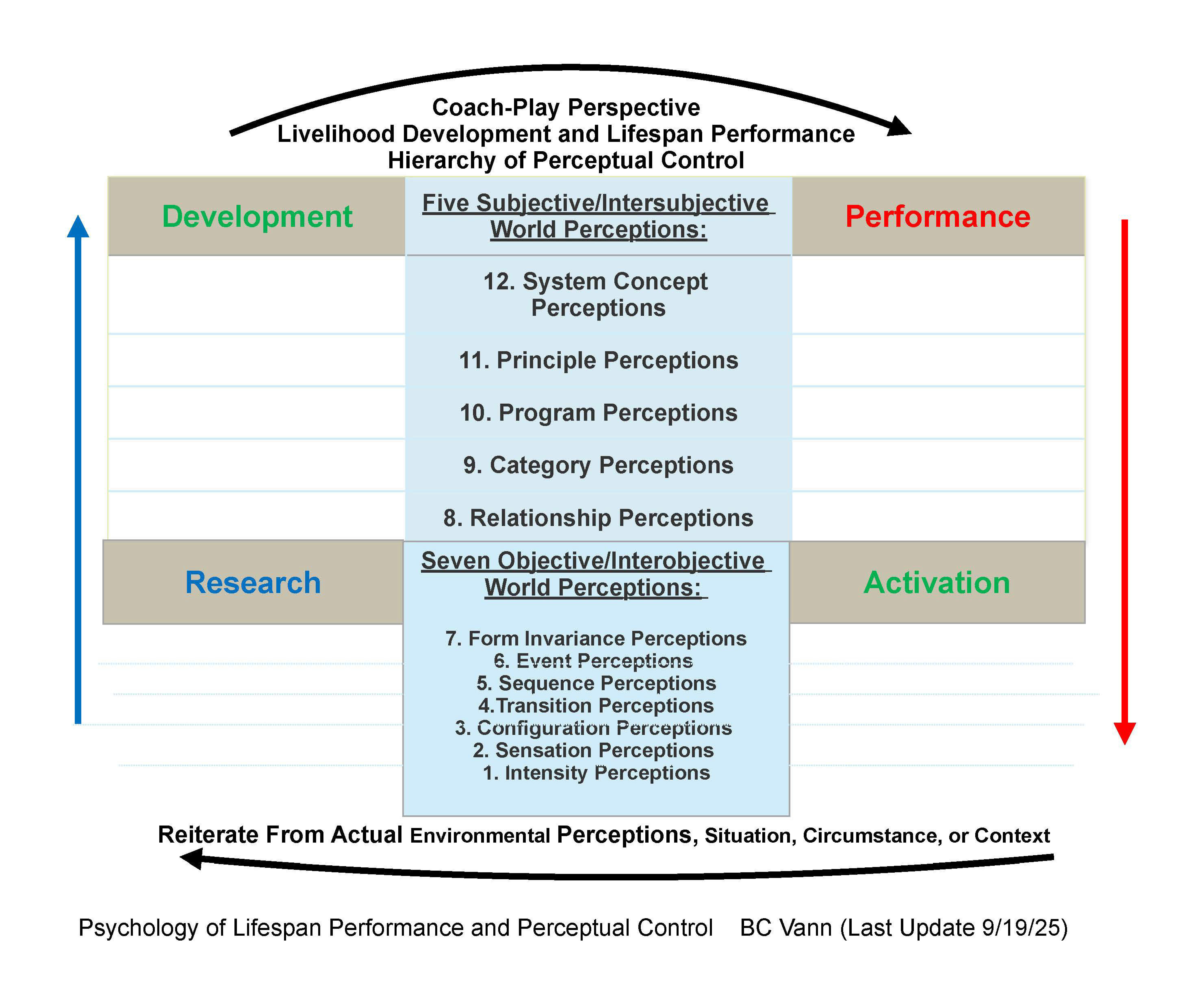
Over five plus decades of research, study, and lived experience, inquiry matured, and the resolution became the Optima Bowling method and ideology: The Lifespan Performance and Perceptual Control (LPPC) methodology emerged as a way to understand and practice how, through the integration of objective perceptions, emotions, and thinking, performance develops across a lifespan. It describes a cyclical, systemic hierarchy of perceptual control loops through which human beings learn to function, adapt, and stabilize understanding under real conditions.
For me, bowling became the environment where this inquiry could be tested without abstraction; a bowling lane strips away philosophical distance. Pressure is immediate. Feedback is unambiguous. Repetition quickly exposes patterns (structure). In that setting, both the limits of effort-based thinking and the emergence of higher-order understanding become visible. The scale changes, but the developmental tensions do not.
Human System Resolve in Four Steps
Before I continue, we need to take a look at the background work first, which has produced the following systems, listed chronologically through my research and studies of the topic of Worldview and Life View:
- Elements of a Cohesive Life: clarified the most basic perspective from which human life is lived: individual subjectivity, societal intersubjectivity, environmental objectivity, and performance as interobjectivity. The first pillar helped identify the domains within which disorientation, conflict, imbalance, and growth are experienced.
- The Psychology of Lifespan Performance and Perceptual Control (LPPC model): the architecture of development and control, showing that performance is not an isolated act but part of the larger activity of research, development, performance, and activation across an individual’s lifespan.
- Performance as the Way of PIE: then brought that work closer to actual participation by naming purpose (why), integrity (how), and experience (what, where, when, and who) as the living trifecta through which performance becomes developmental rather than merely technical.
- Practical Esoterics: the first three foundational pillars of the human system were never meant to stand alone as isolated systems. Each was necessary. Each clarified something essential. Yet each, from its own unique perspective, was also incomplete. Together, they established a solid foundation for research, development, and performance; however, they did not, by themselves, fully explain the broader orientation toward which the work as a whole was evolving. So, communicating those interconnections is the task of the fourth step and final structural pillar.
See More: Human System Resolve
Self-Realization as Lived Functioning
From the holistic perspective of the Optima Bowling World, self-realization is neither a mystical attainment nor a permanent state. It is visible in how a person functions over time. It shows up in patterns of response, quality of attention, emotional regulation, and the gradual stabilization of conduct under pressure.
From our bowling example: (1) A bowler encounters a slump. One collapses into self-attack or avoidance. Another treats the experience as data. (2) A coach finds a method that no longer works. One pushes harder. Another asks what level of thinking is being applied. (3) A proprietor designs a bowling center. One optimizes purely for throughput. A second considers which developmental conditions the environment quietly reinforces. These are not moral distinctions. They are developmental ones.
From the perspective of Performance as the Way of PIE (Purpose, Integrity, and Experience), self-realization becomes visible wherever conduct reflects clarity of purpose, integrity of the human dimensions, and the quality with which experience is used as information rather than justification. In this sense, self-realization is not separate from human potential. It is how potential becomes lived as a functional actuality.
Hybrid Identity, Time, and Scale
A defining feature of the Optima Bowling World is its refusal of false dichotomies. (1) Identities here are inherently hybrid (i.e., hybrid coach-play). Bowlers are learners. Coaches are students of their own thinking. Proprietors are stewards of developmental conditions, whether they intend to be or not. (2) Time functions the same way. Past influences, present pressures, and future possibilities intersect in each moment of performance. A single frame of bowling quietly carries personal history, cultural expectation, and developmental potential at once. And (3) Scale follows suit. The same perceptual and control structures that help refine a bowling release can also be used to examine work, relationships, institutions, and culture.
Of course, small (micro) and large (macro) are not separate worlds; they are measured differently, while their resolution, the human system's resolve, remains the same. At the level of lived experience, these developmental tensions, these human potentialities, are often felt subjectively, sometimes objectivly, as confusion, overload, or the familiar disturbing sense that a specific potential will never be actualized, and it will drive you crazy, before its structure has been understood.
See More: Humanity and Applied Research
See More: Craziness Scale and Personality Development
Conscious Performance as the Bridge
Performance is where human potential and self-realization meet. In the Optima Bowling World, performance is not an endpoint, but a circulation system.
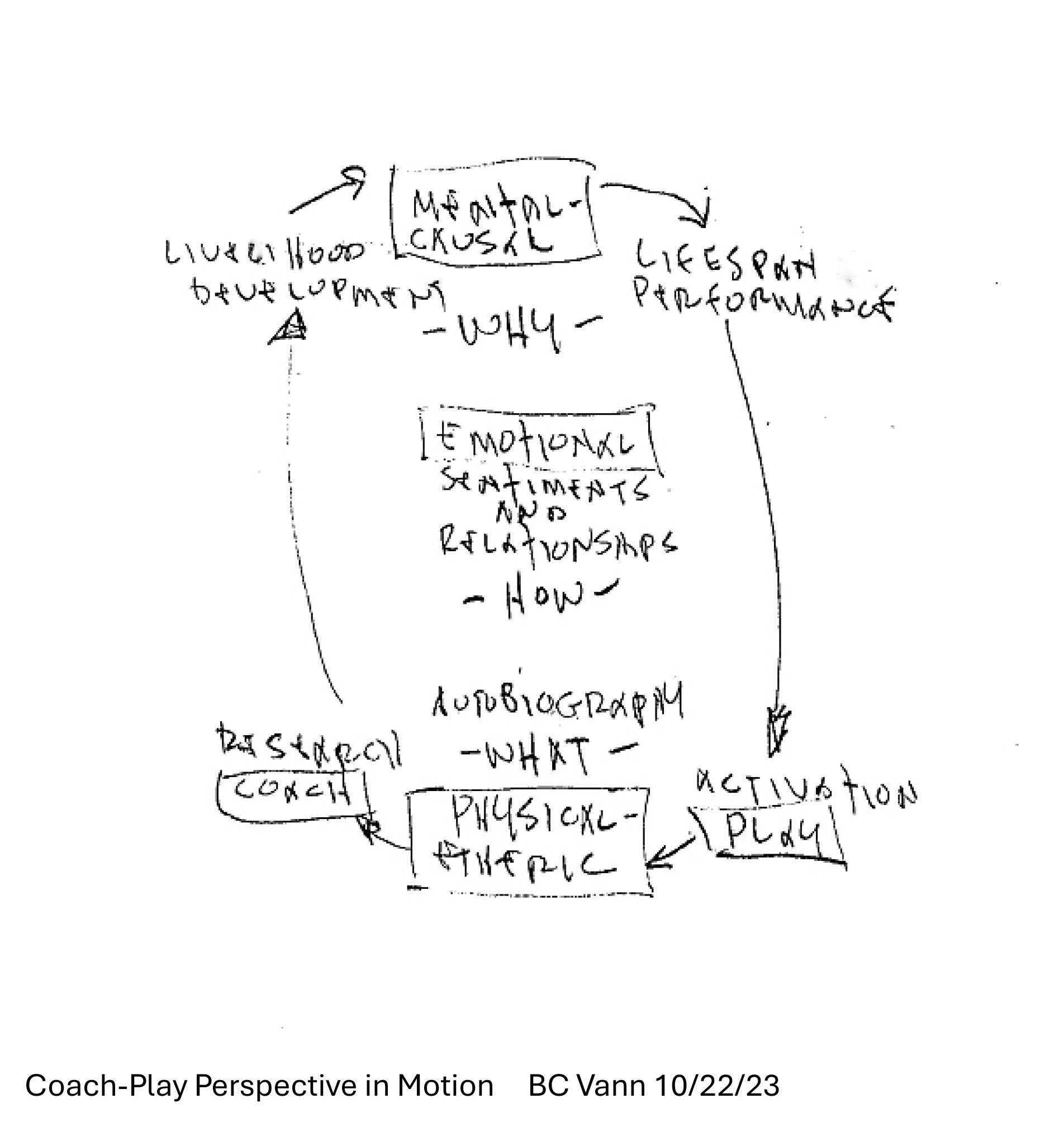
Purpose (Why) functions as a reference perception, orienting action. Integrity (How) holds the dimensions of being human together, allowing higher-order thinking to govern without suppression. Experience (What) provides the raw material through which understanding is refined and stabilized.
When performance is expressed this way, development becomes visible over time. Attention steadies. Emotional reactions shorten. Understanding becomes less performative and more structural. Thus, conscious performance is explained.
See More: The Purposeful PIE
Communities of Practice
No human world governs or sustains itself without a social structure. In the Optima Bowling World, that structure takes the form of a Collaborative Coaching Community of Practice; not a hierarchy of expertise, but a shared inquiry into functioning under real conditions.
Such communities make it more likely that blind spots will be revealed, misinterpretations corrected, and developmental signals recognized rather than distorted. The Cycle of Conscious Performance provides the rhythm for this work, not as doctrine, but as a mirror of how people are already functioning.
Purpose clarifies what is being examined. Shared learning widens perception. Experience grounds understanding. Ownership stabilizes it into character.
My Last Thought
To explain the Optima Bowling World is not to ask anyone to adopt beliefs or chase ideals. It is to recognize that people already live within worlds. Inner, social, environmental, and performative. And that they encounter pressure, confusion, adjustment, and growth. The Optima Bowling World offers a way to see those experiences as part of a coherent human system rather than as personal failure or random noise.
It does not promise ease. It offers something quieter and more demanding: a structure within which human potential need not be wasted, and self-realization need not be left to chance. Bowling, here, is not the point. It is the place where the point can be lived.
See More: Feeling Crazy
See More: Elements of a Cohesive Life View
Author Bio

Bruce Vann is a retired USBC silver-level coach and certified corporate performance coach who uses bowling as a lens for lifelong human development. His work draws on decades of experience in athletics, competitive bowling, mentoring, and coaching, including league, tournament, and the West Coast senior tour. Honor scores: 300 game and 834 series. He publishes his methods and ideologies in human development on OptimaBowling.com. The work began with a question he asked in 1968 that still guides him today: What the hell is wrong with this crazy world of ours?
See More: About-Me