As Your Resource For Self-Development
- The Optima Bowling Coach (2025)
Human System Resolve
(Page Created 12/29/25 Update 4/13/26)
First, we need to look at my foundational work, which produced the following three systems, formed through my early research and studies on the topic of Worldview and Life View:
- Elements of a Cohesive Life: clarified the most basic perspective from which human life is lived: individual subjectivity, societal intersubjectivity, environmental objectivity, and performance as interobjectivity. The first pillar helped identify the domains within which disorientation, conflict, imbalance, and growth are experienced. Elements of a Cohesive Life
- The Psychology of Lifespan Performance and Perceptual Control (LPPC model): the architecture of development and control, showing that performance is not an isolated act but part of the larger activity of research, development, performance, and activation across an individual’s lifespan. The LPPC Model
- Performance as the Way of PIE: then brought that work closer to actual participation by naming purpose (why), integrity (how), and experience (what, where, when, and who) as the living trifecta through which performance becomes developmental rather than merely technical. The Purposeful PIE
The first three pillars sharpened the structure of my lifespan observation and inquiry, bringing coherence to the work that had been accumulating in my thoughts for decades; helping explain why human life becomes fragmented, why performance becomes shallow, and why development requires more than motivation, effort, or method. But even with that positive outcome, they still left something unspoken. They did not fully explain why a human being should care about coherence in the first place, why control must become conscious, why performance should be subordinate to development, or why the movement from fragmentation toward wholeness matters beyond immediate results.
Practical Esoterics is a Long Story
The first three foundational pillars of the human system were never meant to stand alone. Each was necessary. Each clarified something essential. Yet each, from its own unique perspective, was also incomplete. Together, they established a solid foundation for research, development, and performance activation; however, on their own, they did not provide us with a comprehensive perspective on the evolving orientation of my work as a whole. So, communicating the interconnections is the task of the fourth step and final structural pillar.
With the addition of a fourth pillar, I can now communicate that deeper need, what I am calling Practical Esoterics. I use the phrase carefully. I am not using it as a public slogan, a doctrine to adopt, or a system to promote. I am using it as a concept for a descriptive system. By creating the topic of practical esoterics, I'm implying a discussion of the practical application of deeper, sometimes hidden knowledge essential for self-realization. A Holistic Worldview and Esoteric Life View capable of placing human life, development, suffering, responsibility, and the evolution of consciousness within a larger, coherent wholeness. In this sense, practical esoterics is not about mystery for its own sake, nor about fascination with hidden teachings. It is about the potential of self-orientation. It is about the need for a frame of reference large enough to make sense of life as it is lived and exact enough to guide development beyond mere reaction, ambition, or self-improvement.
The distinction matters because a person can possess a good relational model of performance, a useful developmental psychology, and a strong language of purpose, integrity, and experience, yet remain disoriented in relation to the whole of Life. The issue, in human potential terms, is that from this limited perspective, one can improve the parts while still misunderstanding the whole, become more effective without becoming more coherent, optimize performance without the development of self-consciousness, and gather information, frameworks, and methods while remaining uncertain about the meaning and goal of existence. That is one reason life can still feel crazy, even as outward improvements are taking place.
At this juncture, I discovered and entered the world of hylozoics, which has influenced my studies and perspective since early 2022. What struck me most forcefully is that hylozoics is presented not as a belief, a mood, or an ornament, but as a mental system, a scheme of orientation, and a framework intended to liberate the student from disorienting ideologies, illusions, and fictions. The hylozoic sources (see below) present the mental system as a means of giving one's development sufficient support in reality and in life to begin thinking and living coherently.
That Is No Small Matter
When a system is presented as a scheme of orientation, it already points toward a human life beyond information by asserting that the central human problem is not merely ignorance, but disorientation. A person may know many things and still not know where they stand, what kind of reality they inhabit, what development is for, or what lawful participation in life requires. To me, human disorientation is the most insightful explanation of why the fourth pillar is essential for human development.
The first three pillars organize the field, the process, and the way. The fourth pillar, Practical Esoterics, addresses the orientation toward a lifespan performance on a broader scale than the other three perspectives.
Let’s Discuss This
The hylozoic worldview describes existence in terms of three inseparable aspects: matter, consciousness, and motion. 2,700 years ago, Pythagoras identified hylozoics as the science of spiritual materialism, which holds that none of the three aspects can be reduced to another and that no worldview is tenable that excludes either the spiritual or the material side of existence or the dynamic relation between them. It also abolishes the old opposition between spirit and matter by clarifying that consciousness (or spirit) is implicitly present in matter. That motion expresses itself through matter as energy and through consciousness as will. The hylozoic worldview is important not merely as doctrine, but as orientation. It changes the way development itself is understood, no longer as just the improvement of a person within a social or technical system. It becomes the lawful development of consciousness within material reality and the answer to how a human being learns to live, think, act, and participate more coherently within a universe already structured by law, relationship, and motion.
From the perspective of the hylozoic worldview, the first three pillars take on a deeper meaning. (1) A cohesive life is no longer simply a balanced life. It becomes the attempt to bring the domains of living into more intelligible relation, because fragmentation is not merely inconvenient; it is developmentally costly. (2) The LPPC model is no longer just a way of understanding control and performance. It becomes part of a larger effort to understand how consciousness learns through perception, error, correction, and self-activation. (3) PIE is no longer simply a useful trifecta. But transitions from a guide for becoming someone to a way of participating in life from self-consciousness centered in ever-higher dimensions of humanity. Purpose is no longer confused with goals alone, integrity is no longer reduced to consistency alone, and experience is no longer reduced to events alone. And with (4) Practical Esoterics naming the comprehensive orientation toward which those first three pillars were always pointing, even when they could not yet communicate it directly. We now have a systemic explanation of why those first three systems matter beyond their immediate usefulness and of their place within the now-complete developmental context of a four-pillar foundation on which the human system operates.
Practical Esoterics
The word practical in the phrase, practical esoterics, is indispensable. Knowledge by itself is insufficient. The hylozoic sources emphasize this repeatedly. They say that consciousness develops through activity and only through one’s own activity, that everything must become one’s own experience and one’s own working-up of experience into understanding and ability, and that the laws of life must be applied, not merely admired.
The emphasis is on application, one of the strongest reasons this fourth pillar matters. It prevents worldview and life view from becoming an abstraction. It keeps knowledge tied to life. It reminds us that no one is developed by possessing definitions of concepts. Development demands material usage, effort, testing, and the gradual transition of understanding into lived capacity through self-activation. Practical esoterics, therefore, point to knowledge-in-use, not knowledge-as-display.
Practical esoterics is also where the laws of life become central. The hylozoic sources make clear that life is lawful, that the meaning of life is the development of consciousness, and that this development is governed not only by the laws of nature but also by the laws of life as freedom, unity, self-realization, and activation presented as the most important laws for humanity to apply directly. And three other laws of consciousness-raising development, destiny, and reaping, govern whether we understand the first four. By attending to Law, we realize that higher development is possible only when selfishness is overcome, cooperation and service are learned and applied, and consciousness awakens to accord with Law.
The Actual Gravity of the Fourth Pillar
Practical Esoterics is not a decorative addition to the human system. It is not included here to make the work sound more sophisticated or elevated. It has materialized because, without an adequate worldview and life view that includes lawful development, the rest can easily be misunderstood. We, myself included, have been running through life focused only on self-improvement. We have done pretty well by following the first three pillars. Which, in fact, has been the mainstream approach to performance optimization studies and applications for decades, as demonstrated here in the pages of Optima Bowling World. In practice, the mainstream standard of attainment has been to optimize peripheral and superficial actions, improve technique, regulate behavior, and organize effort for better results. Practical esoterics reveals both the value and the limitations of that approach. And those accomplishments have their place, but from that practice, one is more likely to remain a fragmented soul. A crucial point of the fourth pillar is that human development cannot be reduced to optimization. Performance belongs in everyone's life, but it is not the meaning of life. Control matters, but it is not the final aim. Coherence matters, but only because it is part of the larger process of an individual's conscious performance capacity for lawful participation in reality. And that is why I must now speak to disorientation and coherence.
Disorientation and Coherence
Disorientation is not simply being wrong. It is the condition of trying to live without a sufficient relationship with the whole of life. The condition in which one improves fragments while remaining uncertain of the meaning and goal of life. And the condition in which attainment feels real, but the larger issue of orientation remains peripheral. And the condition from which we have not yet been fully rewarded with a comprehensive perspective to explain the broader orientation toward which human beings are evolving.
Coherence, by contrast, not perfection, is the gradual gathering of life into better relationships: self and others, thought and reality, effort and law, performance and development, or the part and the whole. Now then, the fourth pillar, practical esoterics, concerns the transition from one to the other: the movement from fragmentation toward coherence, from disorientation toward the hylozoic worldview and esoteric life view, from concept toward material application, and from peripheral involvement in life toward the profound approach to the development of ever-higher levels of self-consciousness. That is what the first three pillars were preparing us for, even when they did not fully name it.
An Eventuality
Practical Esoterics describes an eventuality, from which development must become more inwardly serious, and the point at which performance can no longer remain an end in itself. At this juncture, the person is required to begin asking not only how to function better, but also what kind of life is currently operative and the actual reasoning for its development. The hylozoic sources also make one more thing very clear: the decisive issue is not a system, form, or organization alone, but people themselves. Function, dynamics, and consciousness matter more than structure by itself. Even an ideal social institution cannot be built from form alone. The solution lies in people, human potential, and in the degree to which they have understood the hylozoic worldview and learned to live in accordance with the laws of life. That insight also belongs here, because it protects this fourth pillar from becoming abstract philosophy. The hylozoic worldview and esoteric life view matter because they shape the human being who lives, acts, chooses, serves, judges, and develops. The hylozoic worldview and esoteric life view are not intellectual luxuries. They are conditions of self-realization.
Resolution to the Crazy World of Man
I can now reveal the meaning of the title of this page, The Human System Resolve. Practical Esoterics, the fourth and final pillar, completes the human system that resolves the primary wicked problem of why human beings feel crazy when they have not actualized enough of humanity's potential.
This page has presented a high-level explanation of Practical Esoterics, which completes the foundational structure that contains the human system and reveals that the deeper purpose of my work was never only to improve bowling, coaching, or performance in any narrow sense. My deeper purpose was to establish a foundation from which a person could begin to approach profound development from a superficial, peripheral life. The communicative task was to lay the groundwork for intelligently entering the Cycle of Conscious Performance with greater seriousness, a broader context, and an exacting responsibility.
That is what the first three pillars were always pointing toward: the need for a worldview and life view in support of lawful development, with self-activation rather than passivity, application rather than speculation, service rather than self-enclosure, and coherence rather than disorientation. Elements of a Cohesive Life, the Psychology of Lifespan Performance and Perceptual Control, and Performance as the Way of PIE pointed toward the recognition that life cannot be lived profoundly without the way of thinking and directional support that orientation provides. And this is why the fourth and final pillar is necessary. It names the comprehensive perspective to explain the broader orientation toward which we are evolving. It is a prerequisite for understanding the crucial work the first three pillars perform; they are not merely useful self-improvement frameworks but are part of the much larger human development movement. And it clarifies that the real issue is not simply how to perform better, but how to live as a coherent individual, responsibly developing a conscious performance, alongside other coherent individuals participating in a collective life.
See Next: The Optimization Fallacy
See More: The First Step: Learning How to Think
PDFs from Hylozoic Sources
1. Henry T. Laurency Publishing Foundation
- The Explanation of Hylozoics Book
- Lars Adelskogh Hylozoic Studies
- Henry T. Laurency Publishing Foundation
2. Adventures of the Monad:
Author Bio
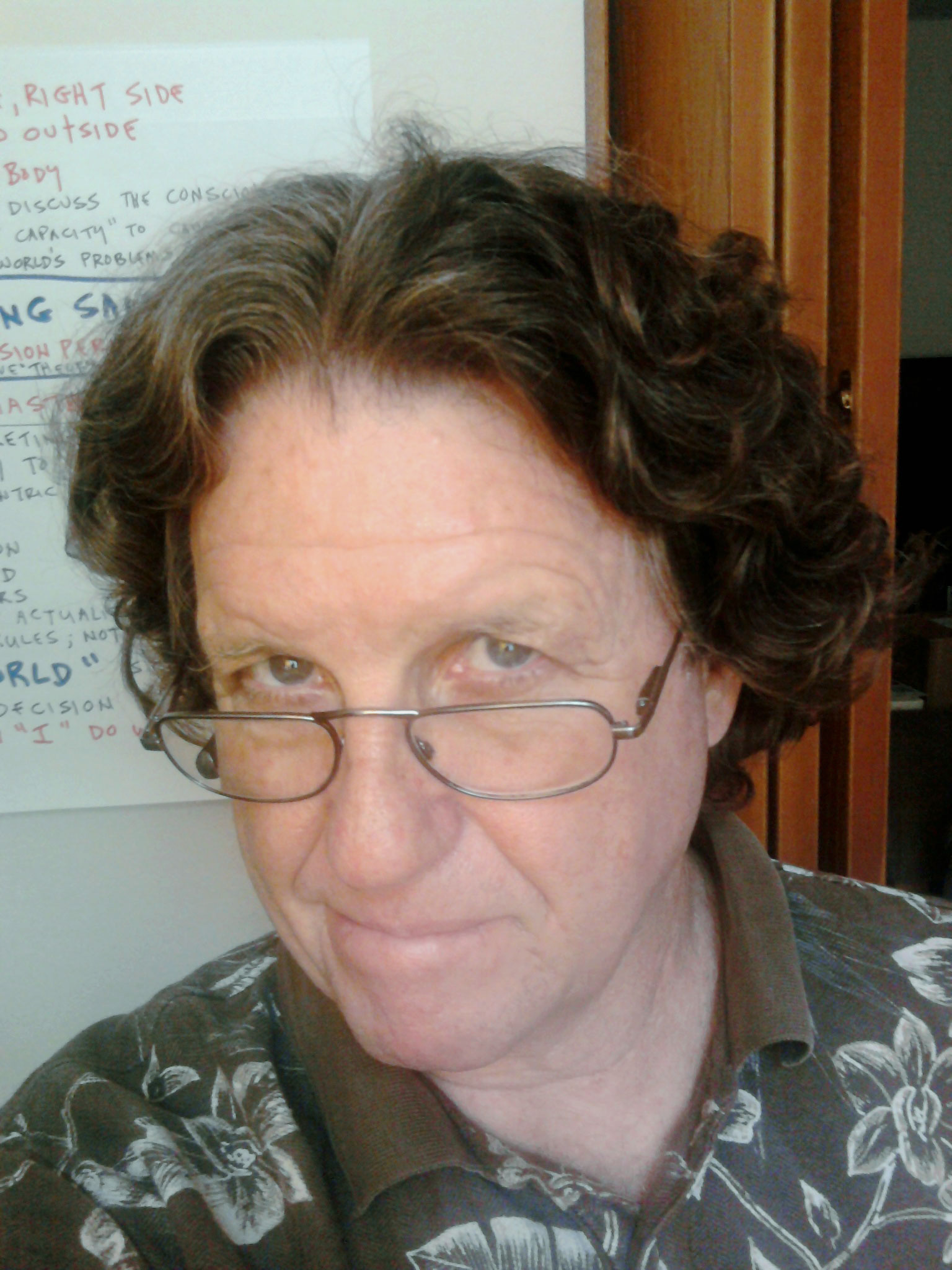
Bruce Vann is a retired USBC silver-level coach and certified corporate performance coach who uses bowling as a lens for lifelong human development. His work draws on decades of experience in athletics, competitive bowling, mentoring, and coaching, including league, tournament, and the West Coast senior tour. Honor scores: 300 game and 834 series. He publishes his methods and ideologies in human development on OptimaBowling.com. The work began with a question he asked in 1968 that still guides him today: What the hell is wrong with this crazy world of ours?
See More: About-Me