As Your Resource For Self-Development
- The Optima Bowling Coach (2025)
Purpose of Research
(Page Created 12/29/25 Update 2/22/26)
Movement I
Directional Awakening: Development does not begin with technique. It begins with disturbance. Something feels misaligned. Something automatically repeats. Something fails to function as transparently as it should. For many, this discomfort is ignored. For some, it becomes a question. For a few, it becomes an invitation to research.
The Purpose of Research marks the first movement in the Cycle of Conscious Performance because it initiates a transition, from which a person decides to move, or not:
- From ignoring to working upon.
- Or from accidental functioning to conscious performance.
What is happening here is not an academic research project. But, existential research.
The Problem of Ignoring
Most human functioning is accidental. Habits form. Emotional reactions stabilize. Interpretations repeat. Social norms are absorbed. Patterns become familiar. What is familiar begins to feel inevitable.
In this condition, life is lived in an auto-mechanical mode, so one ignores all else.
- The physical dimension reacts.
- The emotional dimension amplifies.
- The mental dimension rationalizes.
- Governance is weak.
And because the pattern is shared collectively, in common, it appears normal. The Purpose of Research begins when this normalization is questioned.
- What if the repetition is not a necessity?
- What if the reaction is not destiny?
- What if the clarity requires effort?
Any of those questions will set development in motion.
From Reaction to Responsibility
Research in this context does not mean collecting information. It means investigating perceptions.
- Why do I respond this way?
- What assumptions am I carrying?
- Where does my reasoning collapse under pressure?
- What is actually happening when emotional reaction overtakes clarity of thought?
These questions disrupt auto-mechanical functioning. They introduce responsibility. The purpose of research becomes clear when the individual becomes aware (conscious): If I do not examine the structure of my own thinking, distracting thoughts will continue to repeat. And repetition without consciousness does not produce development.
The Directional Shift
The first movement in the Cycle of Conscious Performance: Directional Awakening, establishes direction. Without direction, effort disperses. One may read, listen, discuss, and analyze, but without a clear developmental aim, inquiry becomes intellectual entertainment. The purpose of research is to clarify the aim:
- To strengthen governance at the level of intelligence.
- To move from reacting unconsciously to functioning consciously.
- To refine performance across a lifespan.
This clarity does not solve the problem immediately. It orients the work.
Research as Lifespan Commitment
The transition from ignoring to working upon is not a one-time event. It recurs across a lifetime. At each stage of development, new blind spots emerge. New assumptions stabilize. New emotional attachments distort reasoning. Here, research enters and begins again.
And this is why it is the first movement in the continuously flowing LPPC cycle, through Research, Development, Performance, and Activation. Then research again. The work does not end. It matures.
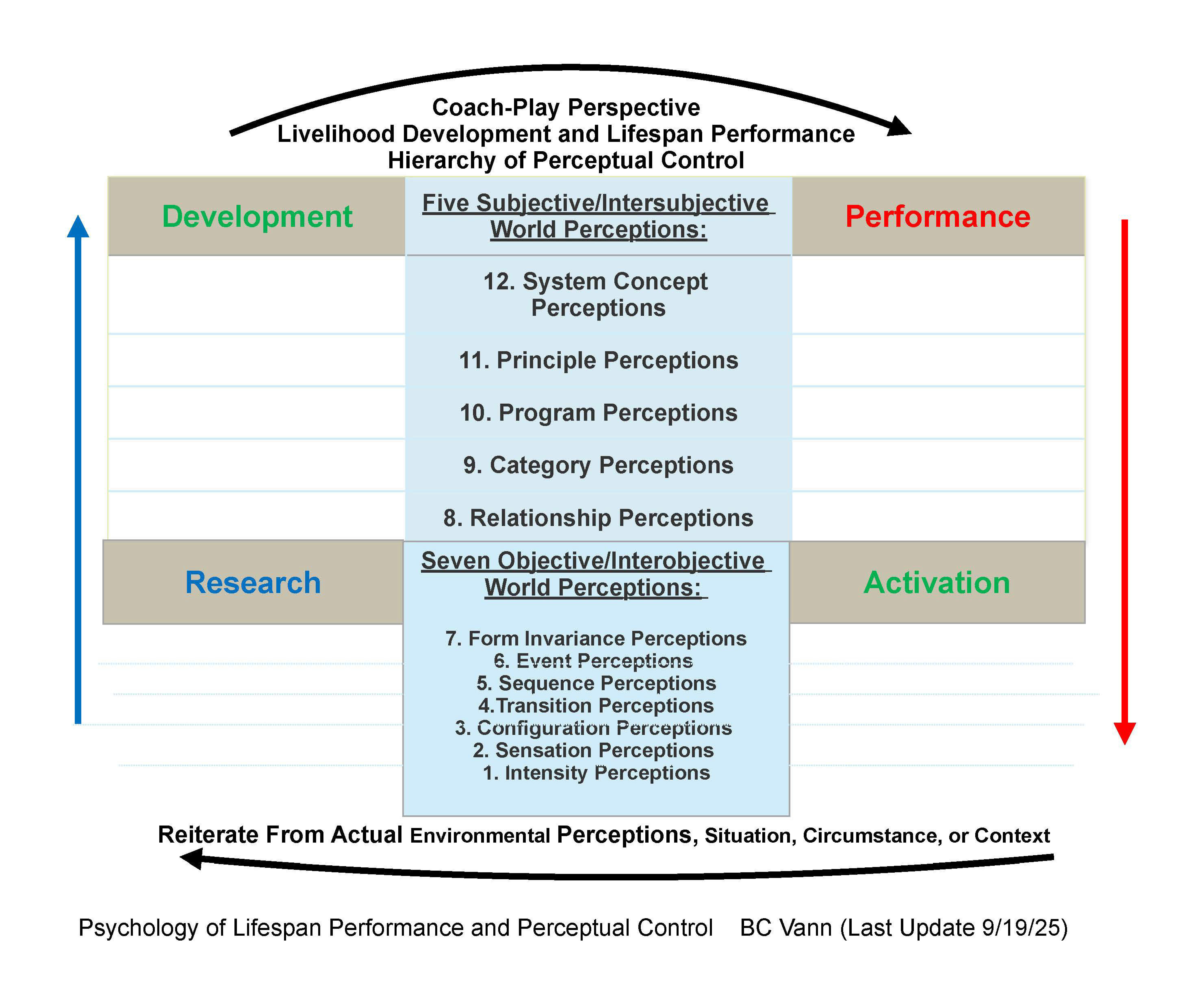
See More: The LPPC Model
The Courage to See
The Purpose of Research requires something rarely emphasized: The essential quality of courage. It is easier to blame institutions, communities, and circumstances than to examine one’s own participation in disorder.
But the Cycle begins internally. If collective governance is to be strengthened, it must first be strengthened within individuals. The world’s confusion is not separate from personal confusion. The question is not only, What is wrong with our crazy? The question also becomes: What in me remains unexamined? Not as self-criticism, but as a developmental responsibility.
The Function of Movement I
The Purpose of Research performs three more essential qualities in three steps:
- It interrupts sleep.
- It awakens direction.
- It establishes the willingness to examine.
Without activating the first phase of the cycle of conscious performance (the Purpose of Research). Shared Learning becomes discussional. Experience becomes repetition. And Ownership becomes illusory. With it, development begins consciously.
The Invitation of Movement I
If you sense that repetition is not inevitable… If you recognize moments where reaction overtakes clarity… If you suspect that performance could be refined rather than endured… Then the first movement is already stirring. Research begins. And with it, the Cycle turns.
See More: Movement II: Shared Learning
Author Bio

Bruce Vann is a retired USBC silver-level coach and certified corporate performance coach who uses bowling as a lens for lifelong human development. His work draws on decades of experience in athletics, competitive bowling, mentoring, and coaching, including league, tournament, and the West Coast senior tour. Honor scores: 300 game and 834 series. He publishes his methods and ideologies in human development on OptimaBowling.com. The work began with a question he asked in 1968 that still guides him today: What the hell is wrong with this crazy world of ours?
See More: About-Me