As Your Resource For Self-Development
- The Optima Bowling Coach (2025)
Turmoil of The Psyche
(Page Created 11/28/20 Update 2/9/26)
Inside the Optima Bowling World, Turmoil of the Psyche refers to a condition that arises when fragmentation intensifies faster than reorganization can keep up. It is not a diagnosis, a disorder, or a failure of character. It is a developmental overload state, one in which perceptual, emotional, and meaning-making systems are under sustained strain.
This page clarifies what psychological turmoil actually is, why it emerges, and how it can still be approached developmentally rather than pathologically.
When Fragmentation Accelerates
Fragmentation becomes turmoil when conflicting demands persist without relief, emotional signals intensify without interpretation, identity structures destabilize faster than they can reorganize, and the individual loses confidence in their own internal references.
What distinguishes turmoil from ordinary fragmentation is speed and saturation. The system is not merely misaligned; it is overwhelmed. This condition often feels sudden, even though it develops cumulatively.
What Turmoil Is, and Is Not
The turmoil of the psyche is often misunderstood as mental weakness, emotional instability, loss of self, or irreversible breakdown. From the Optima Bowling World perspective, turmoil is none of these. Turmoil is not madness, not regression, not the collapse of intelligence, and not proof of incapacity. It occurs when developmental pressure exceeds available coherence.
Control Under Overload
From a Perceptual Control perspective, turmoil is a condition in which error is high across multiple levels, attempts at control create conflict rather than coordination, and higher-order reference values lose clarity or authority.
Lower-level control loops intensify, emotions spike, thought loops repeat, behavior oscillates, but without higher-level guidance, reorganization stalls, producing the subjective experience of chaos, fear, unreality, or loss of meaning.
The system is still functioning. It is simply overloaded.
Why Meaning Is Threatened First
Meaning operates at higher levels of perception. When those levels destabilize, people report existential confusion, loss of direction, identity dissolution, or a sense that “nothing makes sense anymore.” The issue is often treated as a pathology. In reality, it reflects the temporary collapse of reference structures that once organized experience. Meaning must be rebuilt, not imposed.
Emotional Intensity in Turmoil
Emotion becomes extreme in turmoil because the error remains unresolved. Anxiety, despair, rage, or numbness are not random; these signal that the system cannot currently restore coherence using existing structures.
Suppressing these emotions worsens turmoil. Interpreting them carefully and slowly creates the conditions for reorganization. Emotion is not the enemy. Speed is.
Why Forcing Resolution Makes Things Worse
Attempts to rapidly “fix” turmoil through positivity, certainty, or premature identity reconstruction often backfire. They impose reference values that the system cannot yet sustain, increasing conflict rather than reducing it.
From a World perspective, turmoil requires containment rather than correction, time rather than urgency, and inquiry rather than explanation. Stability returns through gradual reorganization, not sudden insight.
Developmental Care, Not Suppression
Turmoil is not resolved by control in the ordinary sense. It is resolved by restoring conditions under which control can reorganize. These conditions include reduced external pressure, safe relational containment, permission not to know, and minimal yet meaningful reference anchors. Environments matter profoundly during turmoil. Poorly structured environments intensify collapse. Well-held environments support recovery without domination.
Turmoil and Transformation
Historically and experientially, turmoil often precedes major developmental transitions. When old identities, purposes, or worldviews can no longer contain lived experience, turmoil appears as a threshold condition.
Not all turmoil leads to transformation, but much transformation passes through turmoil. The difference lies in whether the experience is interpreted developmentally or judged pathologically.
Relationship to Fragmentation and Wholeness
Turmoil represents the far edge of fragmentation.
- Fragmentation is misalignment.
- Turmoil is misalignment under sustained load.
- Wholeness is restored coherence after reorganization.
Understanding this continuum prevents panic when fragmentation deepens and supports patience during recovery.
Reflection Prompt
Recall a period when meaning collapsed before something new eventually emerged. Notice what could not be rushed—and what quietly reorganized over time. That process, not the suffering itself, is what matters.
Orientation Within the Back to the Beginning Pathway
This page addresses a phase of experience that is often misunderstood and frequently avoided: the inner disturbance that arises when familiar ways of maintaining control no longer function as expected. In this sense, turmoil is not a failure of development. It is often a signal that reorganization is already underway.
Within the Back to the Beginning pathway, this page explains why psychological tension, confusion, or emotional volatility often arise when assumptions begin to shift but have not yet stabilized into new forms of control. What feels like disorder from the inside is often the system encountering a persistent error it can no longer ignore.
The pages linked below explore this condition from several complementary angles. Each examines a different expression of inner strain—fragmentation, the pull toward wholeness, the tension between them, and the experience of freedom as an internal rather than external condition. They are not diagnostic tools or therapeutic prescriptions. There are ways of observing how the psyche responds when old reference points lose their organizing power.
If this page resonates, the pages that follow offer places to examine how inner turmoil can become informative rather than overwhelming—revealing development as a process of reorganization rather than repair.
Related Pages:
Resource: The Future is Now, book by J. Krishnamurti (1989).
Author Bio
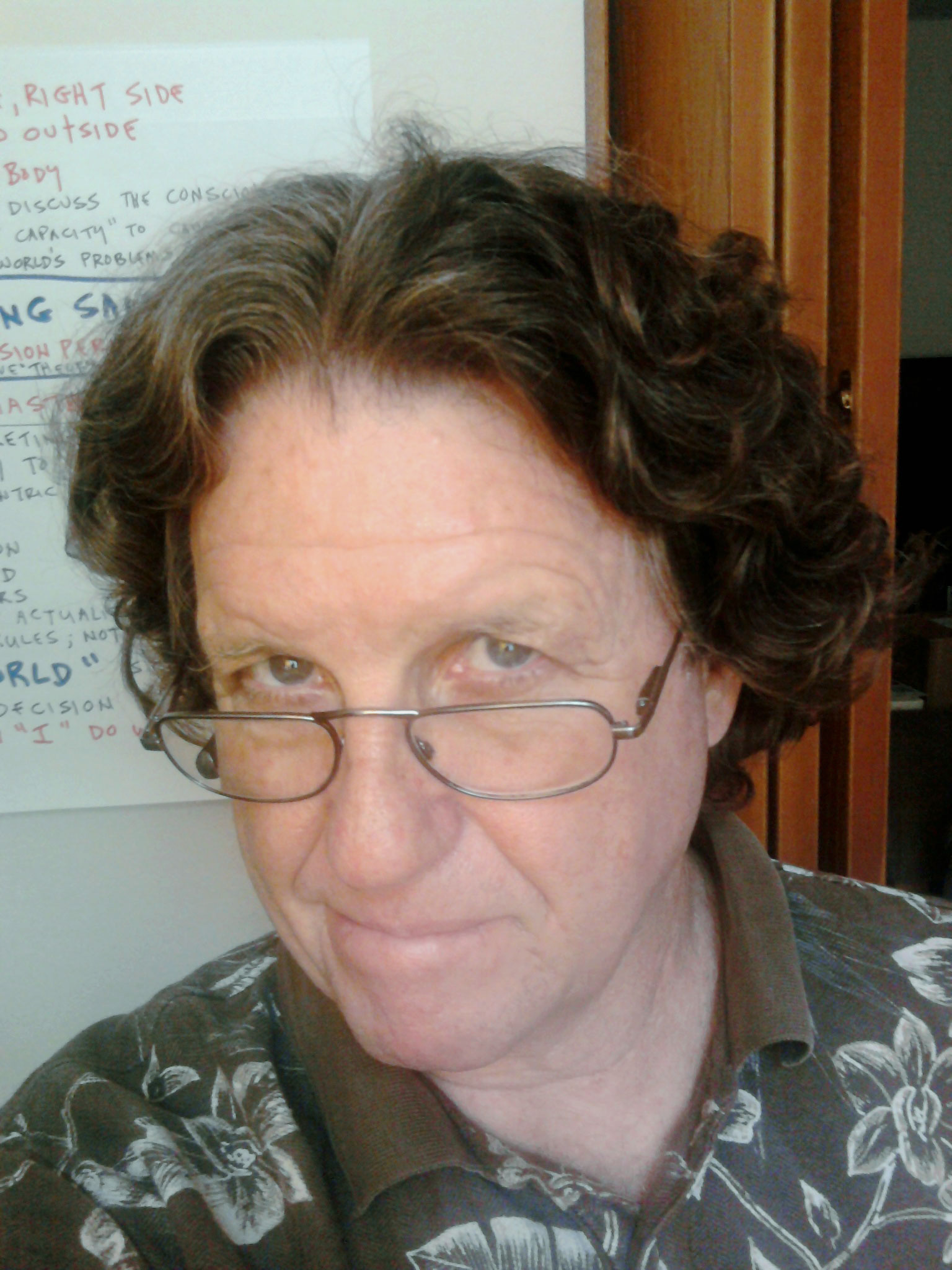
Bruce Vann is a retired USBC silver-level coach and certified corporate performance coach who uses bowling as a lens for lifelong human development. His work draws on decades of experience in athletics, competitive bowling, mentoring, and coaching, including league, tournament, and the West Coast senior tour. Honor scores: 300 game and 834 series. He publishes his methods and ideologies in human development on OptimaBowling.com. The work began with a question he asked in 1968 that still guides him today: What the hell is wrong with this crazy world of ours?
See More: About-Me