As Your Resource For Self-Development
- The Optima Bowling Coach (2025)
Collaborative Coaching Community of Practice
(Page Created 12/29/25 Update 4/21/26)
There was a time when I believed development was primarily individual. Study harder. Think clearer. Practice more deliberately. And if I could refine my own understanding, then a polished performance would follow.
But over time, something became undeniable: the limits of my thinking were invisible to me while I remained only in my thoughts. I could refine techniques. I could regulate emotion. I could even reason about my own reasoning. Yet there were moments, particularly under pressure, in conflict and uncertainty, where perception narrowed, and certainty hardened into false confidence. What I used to call clarity was often simply the boundary of my own perspective, not a personal discovery, only a mirror image of a larger pattern in the world. That revealing perspective is: Humanity does not suffer from a lack of intelligence. Instead, the point is: the actualization of human potential suffers from the isolation of intelligence. (1) Individuals defend interpretations as if they were reality itself. (2) Groups amplify emotion faster than they refine reasoning. And this history repeats, not from a lack of information, but because we rarely perceive the structure of our own thinking.
Emerging from that recognition is The Collaborative Coaching Community of Practice, because:
- If conscious performance is to develop across a lifespan.
- If governance is to strengthen from the higher (mental) down through the emotional and then the physical dimensions.
- Then there must be an environment where the perspective of disciplined individuals widens beyond the limits of individual cognition.
That environment is the Cycle of Conscious Performance.
Movement II — Shared Learning
No individual sees clearly alone: A person may discover purpose in solitude. A person may endure an experience alone. A person may even convince himself that he understands his own development. But the structure of one’s thinking, the architecture of perception itself, is rarely 100% visible from within. So, we turn to the second movement in the Cycle of Conscious Performance.
The Collaborative Coaching Community of Practice is not a professional association. It is not a skills exchange. It is not a therapeutic circle. It is not a place for affirmation. It is the formal expression of Shared Learning, the movement in which perspectival understanding expands beyond the limits of individual cognition.
Within the cycle of conscious performance, its position is exact:
- Purpose: Directional understanding
- Shared Learning: Perspectival expansion
- Experience: Lived testing under pressure
- Ownership: Stabilized integration
Purpose establishes direction, shared Learning widens perception, experience tests stability, and ownership integrates development. Here, our concern is the second movement, the hinge upon which the entire cycle turns.
Why Shared Learning Is Necessary
Human development is hierarchical: As human beings, we operate across three dimensions: physical, emotional, and mental. Governance must move from higher intelligence downward. When it does not, behavior becomes reactive, repetitive, and historically conditioned. Most individuals live primarily within emotional reactions and physical habits, occasionally reasoning about their behavior but rarely governing it through higher-order thinking. Even those who value human development often remain confined to their own interpretive structures.
The difficulty is not a lack of information: It is an unseen limitation. Shared Learning exists to make those limitations visible. When individuals engage in disciplined dialogue with others who are equally committed to human potential, perception widens. Assumptions are revealed. Interpretations are tested. Emotional reactions are examined without indulgence. Thinking becomes more precise, not as horizontal knowledge accumulation, but as vertical clarification.
Coherence and Responsibility
This movement presumes commitment: Shared Learning at the level we are discussing here is not casual conversation. It requires individuals willing to examine the structure of their own thinking under relational pressure. It requires the capacity to tolerate discomfort without retreating into defense. It requires responsibility for interpretation.
Coherence is not perfection: It is the ability to observe oneself while engaged. The Collaborative Community exists to strengthen that ability. Within this environment, individuals practice, not techniques; the practice is of essential qualities and sensible abilities that emerge only through disciplined engagement.
- Remaining mentally present while emotionally activated.
- Distinguishing perception from interpretation.
- Separating principle from preference.
- Refining reasoning without collapsing into reaction.
- Accepting responsibility for influence.
The Function Within the LPPC Cycle
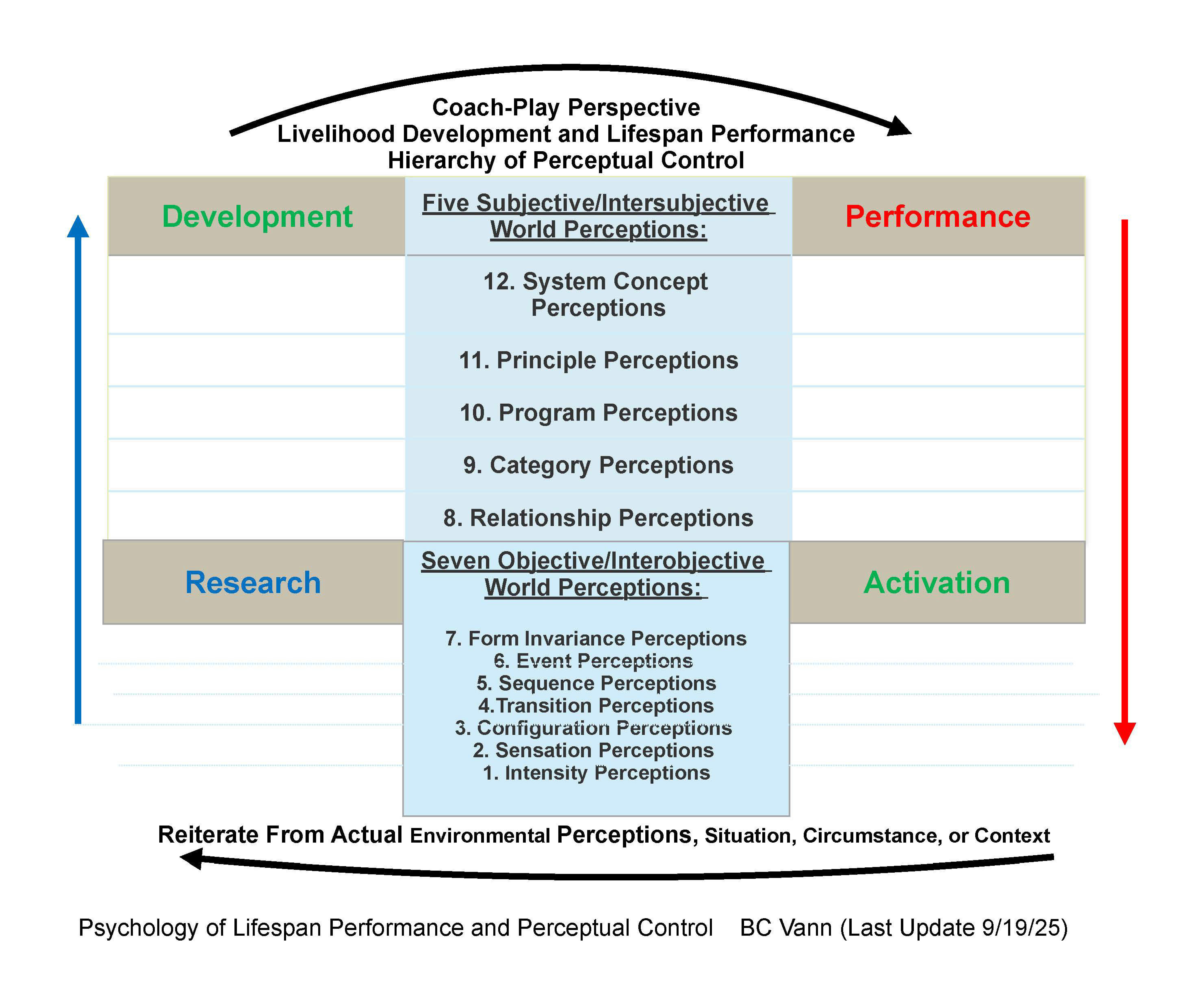
Human development unfolds through continuous cycles of research, development, performance, and activation:
- Purpose initiates research: What am I doing? Why does it matter?
- Shared Learning intensifies development: What am I not seeing? Where is my reasoning incomplete? How is emotional reactivity shaping perception?
- Experience provides performance: How does this understanding function in real life, under real pressure?
- Ownership activates stability: What has now become part of my character?
Without Shared Learning, development collapses into repetition. Experience simply reinforces existing levels of intelligence. Purpose becomes ideology rather than direction. Shared Learning is therefore the corrective mechanism inside the cycle. It prevents stagnation. It exposes blind spots. It strengthens governance at the level of thinking before experience tests it.
See More: The LPPC Model
Dialogue as Disciplined Traction
Dialogue is the primary practice of this movement: Not debate. Not persuasion. Not display. Dialogue is the shared investigation of perceptions. As pressure builds over one's lifespan, the effectiveness of livelihood development declines in emotionally charged, competitive environments, and thinking narrows. Identity tightens. Language hardens. What feels like clarity may actually be defense.
In the Collaborative Coaching Community, individuals in dialogue slow down the interpretive process. They question assumptions. They explore alternative structures of reasoning. They examine the emotional energy attached to conclusions.
Dialogue creates the necessary traction to ascend and descend the slippery slopes of research-for-development and performance-to-activation: It reveals where intelligence is stable and where it collapses. Over time, repeated engagement strengthens higher-order thinking. The Will to Reason is increasingly practiced to maintain its availability. Emotional life comes under clearer governance. Perception widens without losing grounding. And this is how perspectival understanding matures.
From Shared Learning to Experience
The Collaborative Community is not the destination: It is the hinge of expanded perspective. Individuals return to lived environments (e.g., performance settings, relationships, leadership roles, or moments of uncertainty) and test what they have learned. Experience exposes new tensions. Those tensions return to Purpose.
The cycle continues:
- Purpose clarifies direction.
- Shared Learning widens perception.
- Experience tests integrity.
- Ownership stabilizes coherence.
Then a new ascent begins. Over time, this rhythm strengthens intelligence across the lifespan.
The Larger Context
Humanity’s Developmental Challenge: The world appears disordered not because intelligence is absent, but because governance is weak. Emotional reaction frequently outruns reasoning. Collective narratives overpower disciplined thought. Development flattens into comfort or dogma, from which reality is ignored.
Mass solutions cannot correct this: Development proceeds through individuals who gain coherence and sustain it under pressure. Individuals within the Collaborative Coaching Community of Practice contribute to this larger evolutionary task by simply following conversations during in-person meetings or digital interactions; all disciplined individuals are capable of governing themselves from higher levels of intelligence.
The work does not promise transformation, nor does it offer certainty. But simply provides a structured, mental environment in which perceptual clarity strengthens, responsibility deepens, and the human potential of conscious performance is actualized.
Final Clarification
- This movement does not seek agreement: It seeks expansion.
- It does not seek affirmation: It seeks precision.
- It does not attempt to save humanity: It strengthens those willing to participate in humanity’s developmental evolution of consciousness.
Shared Learning is the second movement in the Cycle because perspective must widen before experience can transform. Without it, development stagnates. With it, governance strengthens. And where governance strengthens, coherence becomes natural rather than forced.
That is its role: And that is why it belongs exactly where it is located in the Cycle of Conscious Performance.
See More: Movement III Experience
See More: Why Coaching Evolves as Human Development Evolves
See More: Bowling Collaborative Coaching Community of Practice
Back To: Introducing The Cycle of Conscious Performance
Author Bio

Bruce Vann is a retired USBC silver-level coach and certified corporate performance coach who uses bowling as a lens for lifelong human development. His work draws on decades of experience in athletics, competitive bowling, mentoring, and coaching, including league, tournament, and the West Coast senior tour. Honor scores: 300 game and 834 series. He publishes his methods and ideologies in human development on OptimaBowling.com. The work began with a question he asked in 1968 that still guides him today: What the hell is wrong with this crazy world of ours?
See More: About-Me