As Your Resource For Self-Development
- The Optima Bowling Coach (2025)
People Primer
(Page Created 6/6/20 Updated 2/5/26)
Inside the Optima Bowling World, People Primer is a practical orientation to how people actually function. It is written for everyday life—not as theory, diagnosis, or advice, but as a way to reduce misunderstanding between people by clarifying what is usually misread.
This page exists because many conflicts, frustrations, and breakdowns are not caused by bad intentions or weak character, but by mistaken assumptions about how people work.
Why People Are So Often Misunderstood
Most of us were taught—explicitly or implicitly—that people behave the way they do because of personality traits, attitudes, motivation, or willpower.
From this view, when something goes wrong, the cause must be laziness, resistance, lack of discipline, or flawed character. These explanations feel intuitive. They are also essentially wrong. People are misunderstood not because they are complicated, but because we look in the wrong place.
What People Are Actually Doing
People are not primarily trying to behave well or badly. They are trying to keep their experience stable. At every moment, individuals act to maintain: a sense of competence, emotional equilibrium, social belonging, meaning, or safety.
Behavior is the outward expression of this effort. When circumstances threaten what someone is trying to stabilize, behavior changes sometimes calmly, sometimes dramatically. Seen this way, behavior becomes informative rather than confusing.
Why Reasonable People Do Unreasonable Things
When pressure increases and control weakens, people do not become irrational. They become overloaded.
- Error accumulates.
- Emotion intensifies.
- Attention narrows.
- Behavior escalates.
This explains why intelligent, well-meaning people overreact, shut down, argue past each other, or make decisions they later regret. These reactions are not defects, there signs that something important is being threatened internally.
Emotion as Information
Emotion is often treated as noise to be suppressed or managed. From the Optima Bowling World perspective, emotion is a signal. Strong emotion indicates a persistent error, something that matters is out of alignment. Ignoring emotion removes the signal without resolving the cause. Over-identifying with emotions amplifies confusion. Learning to read emotional signals rather than obey or suppress them is a key step in accurately understanding people.
Why Advice Often Fails
Advice assumes that if someone knows what to do, they will do it. But advice fails when it conflicts with internal reference values, threatens identity or competence, or increases pressure without restoring control.
People rarely resist advice because they are stubborn. They resist because the advice would destabilize something they are already struggling to control. Understanding this changes how help is offered and when it should not be.
Listening Without Fixing
One of the most effective ways to support people is to stop trying to fix them. Listening works not because it feels nice, but because it reduces error, restores perceptual clarity, and allows control systems to reorganize naturally. Understanding restores internal order, which is why people often feel better after being understood, even if nothing has changed externally.
Responsibility Without Judgment
A People Primer does not excuse harmful behavior. It reframes responsibility. Responsibility means acknowledging impact, examining what is being controlled, and reorganizing for future coherence.
Judgment freezes learning. Responsibility enables it. This distinction allows accountability without moral collapse, both personally and collectively.
Why This Matters Everywhere
Misunderstanding people drives ineffective leadership, brittle institutions, broken education systems, and unnecessary conflict. When people are understood as control systems rather than behavior machines, environments can be designed to support stability, learning, and growth instead of resistance and burnout. This applies at home, at work, in sport, and in society.
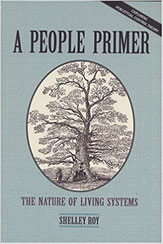
Reference: A People Primer: The Nature of Living Systems (Reprinted March 1, 2025) by Shelley Roy.
Back To: Researching Perceptual Control Theory (PCT)
Author Bio

Bruce Vann is a retired USBC silver-level coach and certified corporate performance coach who uses bowling as a lens for lifelong human development. His work draws on decades of experience in athletics, competitive bowling, mentoring, and coaching, including league, tournament, and the West Coast senior tour. Honor scores: 300 game and 834 series. He publishes his methods and ideologies in human development on OptimaBowling.com. The work began with a question he asked in 1968 that still guides him today: What the hell is wrong with this crazy world of ours?
See More: About-Me