As Your Resource For Self-Development
- The Optima Bowling Coach (2025)
Worldview and Life View of Practical Esoterics
(Page Created 8/8/26)
The Fourth Foundational Pillar
The first three foundational pillars of the Human System Resolve answer three increasingly important questions.
- Elements of a Cohesive Life asks: Where does human development occur? It identifies the relational field of individual subjectivity, societal intersubjectivity, environmental objectivity, and performance as interobjectivity.
- The Psychology of Lifespan Performance and Perceptual Control asks: How does the human system develop within that field? LPPC describes the recurring movement of research, development, performance, activation, consequence, and renewed inquiry.
- Performance as the Way of PIE asks: How does the individual participate consciously in that process? Purpose gives developmental direction. Integrity organizes the human system for expression. Experience returns reality's answer. But the third concludes with another question: Toward what larger conception of reality and life should this developing human system orient its Purpose, organize its Integrity, and interpret its Experience? That question requires the fourth pillar: Worldview and Life View of Practical Esoterics.
The first three pillars establish the field, process, and way. The fourth establishes their orientation to reality.
Why Another Pillar Became Necessary
For much of my performance research, I was concerned with how people function.
- How do we learn?
- How do we regulate performance?
- How do perceptions influence action?
- How do Purpose, Integrity, and Experience remain in a useful relationship?
- How does potential become increasingly capable performance?
Those questions remain important. But they eventually exposed their own limitation. A human being can become better at controlling perceptions without asking whether those perceptions correspond adequately with reality. A person can develop impressive abilities without developing equally reliable qualities. A performer can become highly purposeful without examining whether the purpose itself deserves to be pursued. And a person can improve many fragments of life while remaining disoriented about existence as a whole.
The Human System Resolve page reached this same conclusion: knowledge, models, and performance methods can remain partial if the individual lacks a sufficiently comprehensive worldview and life view. That is the problem the fourth pillar addresses.
What I Mean by Practical Esoterics
I use Practical Esoterics as a descriptive system concept. It is not intended here as a new doctrine to adopt, an organization to join, or a slogan to promote. Nor does practical mean reducing esoteric knowledge to a collection of techniques for obtaining desired results; quite the opposite.
The word practical emphasizes that knowledge of life has little developmental value if it remains information. Understanding must enter living. It must be tested through experience. It must alter perception. It must become increasing ability. And eventually it must become a more trustworthy condition from which a human being thinks, chooses, acts, serves, and develops.
The hylozoic sources of the Pythagorean mental system emphasize precisely this movement. They describe the development of consciousness as occurring through the individual's own activity and the working up of personal experience into understanding and ability. That is the sense in which I use the word practical. Practical Esoterics is deeper knowledge brought into developmental relationship with actual life.
Worldview and Life View Are Not the Same Thing
One of the most helpful clarifications in my research was learning to distinguish worldview from life view. A worldview is concerned fundamentally with: What is reality? A life view asks: Given that reality, what does human life mean and how should it be lived?
The distinction matters because a life view can easily develop from inherited assumptions, cultural conventions, personal preference, religious belief, psychological theory, or political ideology without first establishing whether its underlying picture of reality is adequate. The hylozoic presentation reverses that order.
Life view should rest upon world view: knowledge about life should be developed from the best available understanding of what reality actually is. The research sources speak plainly: one must know something of how things are before deciding how they should be, and that life view guides practical life while world view supplies its knowledge basis.
That is a foundational relationship for Practical Esoterics:
- Reality before prescription.
- World view before life view.
- Understanding before purposeful application.
The Hylozoic Worldview
The worldview presently providing the larger orientation for this work is Pythagorean hylozoics, particularly as presented in the Henry T. Laurency tradition. I approach it here as a mental system and scheme of orientation: not merely as spiritual language. Its starting proposition is remarkably simple.
Existence has three inseparable and equivalent aspects:
- Matter
- Consciousness
- Motion
Hylozoics rejects the opposition between matter and spirit. Matter and consciousness are presented as two aspects of the same reality, with motion as the third. Motion manifests through matter as energy and through consciousness as will. None of the three can be reduced to another.
This trinity changes the human-development question substantially. A human being cannot adequately be understood through physical matter alone. Nor can consciousness be understood as though it exists independently of matter. Nor can human development be understood without motion: activity, energy, willing, change, interaction, and consequence.
The human being participates in all three aspects simultaneously. That is why this worldview matters to the first three pillars.
Matter: Contact With Actuality
Matter gives development objective resistance. The organism has conditions and limits. Other bodies exist. The physical environment cannot simply be wished into another condition. Actions produce material effects. Experience occurs somewhere. Performance becomes actual.
This is why the reconstruction of Elements of a Cohesive Life places such importance on objectivity, and why LPPC continually returns understanding to actual conditions. Matter provides one essential answer to human imagination: What is actually here?
Consciousness: The Developing Self
Consciousness includes perception, feeling, thought, attention, understanding, self-awareness, and increasingly wider capacities for apprehending relationships. In the hylozoic worldview, consciousness is not restricted to ordinary human mentality. Consciousness develops through progressively higher stages, and the meaning of life is stated in its widest sense as the development of consciousness (the spirit of existence).
That proposition radically changes the meaning of performance. If consciousness development is primary, then better performance cannot be the final human aim. Performance becomes one material field in which consciousness can encounter resistance, discover error, develop abilities, acquire qualities, assume responsibility, and work experience into greater understanding.
Performance becomes developmental when it serves consciousness rather than replacing its development with optimization.
Motion: The Dynamic Aspect
- Nothing develops without activity.
- Perception moves toward action.
- Purpose seeks expression.
- Energy becomes performance.
- Consequences alter later perception.
- Life changes continually.
Hylozoics is unique in its principle of the three interdependent aspects of reality. Motion is expressed through consciousness as will. This gives another perspective on LPPC. Research, development, performance, and activation are not simply stages on a diagram. They describe movement. Experience generates inquiry. Inquiry reorganizes understanding. Understanding enters performance. Performance produces consequence. Consequence becomes new experience. The human system develops through motion.
The Monad and Self-Realization
Hylozoics also gives a more exact answer to another question: What is actually developing? Its answer is the monad: the enduring individual center whose consciousness develops through successive forms. This is not merely another word for personality.
The personality belongs to an incarnation. The monad is presented as the enduring individual whose potential consciousness is progressively actualized and activated through development. That larger claim belongs to the worldview itself and should be understood as such.
For Practical Esoterics, its significance is that self-realization acquires an extended developmental intention. Self-realization is not discovering a preferred identity. It is not perfecting the personality. It is not maximizing talent. It is the individual's own gradual acquisition and realization of increasingly developed consciousness, qualities, and abilities.
The law of self-realization expresses this directly: each being must through its own knowledge and work acquire the qualities and abilities necessary for further development. That makes the work irreducibly personal.
- No coach can perform it for another.
- No teacher can transfer it intact.
- No book can substitute for it.
Knowledge may assist. Experience may challenge. Others may support. But development must become one's own work.
The Laws of Life
This is where worldview begins to become life view. Hylozoics distinguishes the laws of nature, concerning the matter aspect, from laws of life, concerning consciousness and its development. Seven laws are especially relevant to the human stage. Four can be increasingly understood and applied intentionally:
- Freedom: development requires individuality and the equal right of others to their own development.
- Unity: all life participates in a larger unity; higher development requires increasing cooperation and service rather than isolated selfishness.
- Self-Realization: each individual must acquire development through one's own character, knowledge, effort, qualities, and abilities.
- Activation: consciousness develops through activity; experience must be personally worked up into understanding and capability.
Three others operate whether or not the individual understands them:
- Development: life proceeds through continuing development.
- Destiny: life situations provide experiences related to the individual's developmental conditions.
- Reaping: actions, omissions, thought, feeling, and conduct enter a field of consequences.
These laws should not be reduced to motivational principles. Within the hylozoic life view, they describe lawful conditions of consciousness development. That is why Practical Esoterics cannot mean merely reading about them. The practical question is: What happens when these laws become reference points against which one's actual living is examined? That is where worldview begins entering conduct.
Freedom and Law Are Not Opposites
One of the most useful implications is the relationship between freedom and law. Ordinary thinking often places them in opposition. Freedom appears to mean absence of constraint. Law appears to mean restriction. The hylozoic account treats that dichotomy differently: genuine freedom increases with the capacity to understand and live according to the laws of life. Freedom and law become mutually dependent rather than mutually exclusive.
That statement connects directly with the developmental movement already present in Performance Authentication. External control may initially provide useful structure. But development gradually requires self-regulation and ultimately greater self-authorization. Self-authorization does not mean arbitrary action. It means increasing capacity to assume responsibility for one's own references and actions within reality and law.
That is a much deeper conception of freedom than simply doing what one wants.
Unity Changes the Meaning of Development
The law of unity introduces an equally significant correction. If consciousness ultimately participates in larger wholes, self-development cannot end with the isolated self. The hylozoic presentation says that higher development requires the individual, while preserving self-identity, to enter increasingly larger communities of consciousness in which cooperation and service become essential. This has consequences for performance.
- Ability cannot be judged only by whether it succeeds.
- Power cannot be judged only by whether it produces the intended outcome.
- Intelligence cannot be judged only by whether it solves the problem presented to it.
As consciousness develops, another question becomes increasingly important: What is this ability being used for? That is where essential qualities and the will to unity gain developmental importance.
From Disorientation Toward Coherence
Practical Esoterics, therefore, returns us to the problem of human disorientation. Disorientation does not simply mean possessing incorrect information. It means lacking a sufficiently adequate relationship between one's conception of life and the reality within which life is being lived. A person can therefore be: successful and disoriented, educated and disoriented, highly skilled and disoriented, purposeful and disoriented, or extraordinarily optimized and still disoriented.
The Human System Resolve page already recognized that a person may improve the parts while misunderstanding the whole and may gather increasingly sophisticated methods while remaining uncertain about the meaning and goal of existence. Practical Esoterics addresses that condition through orientation. But coherence is not simply the opposite of disorientation. It is developmental.
Coherence is increasing correspondence among: perception and reality, thought and experience, purpose and law, abilities and essential qualities, self and others, performance and development, and the individual part and the larger whole.
The aim is not to become perfectly coherent. The aim is to become increasingly capable of discovering incoherence and working through it consciously.
Why Practical Esoterics Comes Fourth
The order of the Human System Resolve now matters. The first pillar asks: Where am I participating? Elements of a Cohesive Life reveals the relational field.
The second asks: How am I developing within it? LPPC reveals the recurring process of perceptual control, inquiry, reorganization, performance, and consequence.
The third asks: How do I participate consciously? PIE organizes Purpose, Integrity, and Experience into developmental circulation.
Only then does the fourth ask: What reality and life view should orient the entire undertaking? That is why Practical Esoterics comes fourth rather than first. If introduced first, esoterics can remain abstract knowledge. Placed fourth, it encounters a human being who already understands something of: relationship, feedback, perceptual control, development, performance, purpose, integrity, and experience.
The worldview now has something practical to illuminate. And the first three pillars acquire a wider meaning in return.
The Four Pillars Reconsidered
From the perspective of Practical Esoterics: Elements of a Cohesive Life becomes more than a model of personal balance. It describes the relational field through which a human being encounters self, others, material reality, and performance.
LPPC becomes more than a performance-control cycle. It describes a recurring developmental process through which perception and understanding are tested against actuality and reorganized through experience.
PIE becomes more than a performance mnemonic. Purpose becomes increasingly examinable within a larger conception of development. Integrity becomes increasingly coherent correspondence among abilities, qualities, purpose, and reality. Experience becomes the material through which life answers.
And Practical Esoterics supplies the worldview and life view capable of asking what the entire process is for. This is why the fourth pillar does not compete with the other three. It changes their context.
From Optimization Toward Consciousness Development
This also clarifies one of the most significant changes in my own work. For decades, the language of performance naturally revolved around optimization.
- Improve the technique.
- Reduce error.
- Strengthen execution.
- Obtain the preferred outcome.
Those activities remain useful within defined tasks. But optimization belongs to tasks; consciousness development belongs to life. The fourth pillar prevents the first three from being reduced to an increasingly sophisticated optimization system. The goal is no longer simply:
- How can I control this perception more successfully?
- How can I obtain this result more reliably?
- How can I become better at this performance?
The deeper questions become:
- What am I learning to perceive?
- What references are organizing my life?
- Do they correspond increasingly with reality?
- What abilities am I developing?
- What qualities are becoming reliable?
- What consequences does my action create for others?
- What does this experience reveal about the condition of my consciousness?
- What requires further development?
Those are different questions. They move performance from an end toward a field of consciousness development.
Practical Esoterics and the Cycle of Conscious Performance
When one reaches the point at which the four-pillar foundation meets the Cycle of Conscious Performance. Their research no longer means simply collecting information; it becomes an investigation of experience in relation to reality. And development is no longer the simple means of adding skills. But includes the development of perception, understanding, abilities, essential qualities, and increasingly adequate orientation.
Performance no longer means the production of outcomes exclusively. And becomes the expression and testing of the present condition of the human system. Activation returns that expression to actuality, where consequence provides the material for renewed research.
The Cycle therefore becomes more than a performance loop, to focus on an existential developmental relationship between matter, consciousness, and motion/energy/will.
A Working Orientation, Not a Finished Claim
There is one final distinction I want this page to preserve. Practical Esoterics is not presented here as though I have finished developing it. Nor is this page intended to establish personal possession of esoteric knowledge. The hylozoic sources themselves emphasize independent mental effort rather than authority, repetition, or simple belief. And the fourth pillar only makes sense if it remains consistent with that principle.
So I regard Practical Esoterics as an orientation for continuing developmental research. Its questions are more important than any claim to completion:
- Can deeper knowledge be made practical without reducing it to technique?
- Can worldview increasingly correspond with reality?
- Can life view increasingly reflect worldview?
- Can knowledge become ability?
- Can ability become trustworthy capability?
- Can individual development increasingly participate in unity?
- Can performance become one means through which consciousness learns to live more lawfully within reality?
Those questions now define the work.
The Fourth Pillar
The fourth foundational pillar can therefore be stated simply: Worldview and Life View of Practical Esoterics provides the orienting framework through which the human system can place relationship, perceptual control, purpose, integrity, experience, performance, and development within a larger conception of reality and the development of consciousness.
- It does not replace the first three pillars.
- It explains why they matter.
- Elements provide the field.
- LPPC provides the process.
- PIE provides the way of participation.
- Practical Esoterics provides the orientation to reality.
Together, the four pillars form the foundation of Human System Resolve. And they lead toward a very different understanding of conscious performance: not the optimization of a human being, not the perfection of a personality, and not the conquest of life through control, but the continuing development of consciousness through increasingly coherent participation in reality.
Author Bio
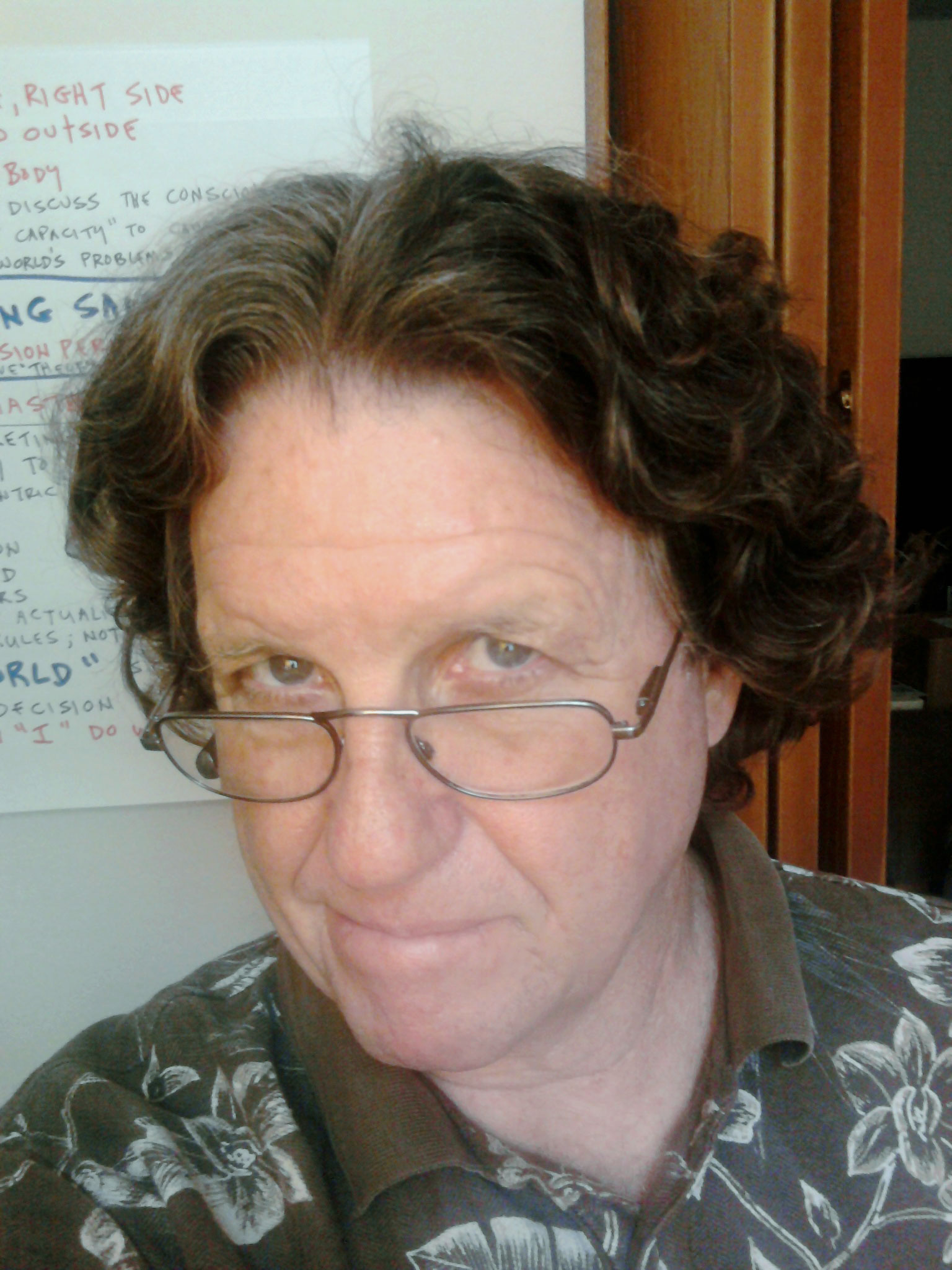
Bruce Vann is a retired USBC silver-level coach and certified corporate performance coach who uses bowling as a lens for lifelong human development. His work draws on decades of experience in athletics, competitive bowling, mentoring, and coaching, including league, tournament, and the West Coast senior tour. Honor scores: 300 game and 834 series. He publishes his methods and ideologies in human development on OptimaBowling.com. The work began with a question he asked in 1968 that still guides him today: What the hell is wrong with this crazy world of ours?
See More: About-Me