As Your Resource For Self-Development
- The Optima Bowling Coach (2025)
Religion Is Received at a Level
(Page Created 5/9/26)
How Humanity’s Search for Coherence Becomes the Individual’s Responsibility for Development
Religion is one of humanity’s oldest attempts to gain coherence under the pressure of existence.
Human beings did not create religion because life was simple. They created, received, refined, defended, distorted, and renewed religion because life pressed upon them from every side. Birth, death, suffering, nature, fear, desire, injustice, social disorder, guilt, longing, beauty, conscience, and the unknown. All demanded orientation. The human being could not simply live by appetite and instinct. Something in the human consciousness needed to know where it stood, what mattered, what was lawful, what was dangerous, what was sacred, what must be done, and what kind of life was worthy.
That is where religion begins. Not as an abstraction. Not first as doctrine. Not first as an institution. Religion begins as humanity’s effort to stand within existence without being overwhelmed by it from within. But once religion enters history, it becomes more than an original response. It becomes an inheritance. It becomes ritual, story, scripture, law, symbol, teacher, institution, community, memory, identity, devotion, and practice. It is passed from generation to generation. It becomes part of the world into which individuals are born.
And then the deeper question appears. What does the person do with what has been inherited?
That question is the center of this essay. Religion may arise collectively, but it becomes developmental only individually. Tradition may preserve wisdom, beauty, discipline, law, reverence, and insight. But no tradition can automatically develop a person. People receive religion through a level of consciousness and utilize it according to a purposeful direction of will. The same religion may become fear, order, beauty, love, reason, unity, or distortion, depending on the individual consciousness receiving it. A religion is not only what it teaches. It is also what one’s self-consciousness is capable of understanding.
Religion Begins Under Pressure
The origin of a religion reveals humanity’s repeated effort to gain coherence under the pressure of existence.
That sentence provides the starting point for our inquiry. Wherever human beings appear, they face pressures greater than ordinary preference. They must face death. They must live with suffering. They must organize desire. They must raise children. They must restrain violence. They must bury their dead. They must explain fortune and misfortune. They must preserve memory. They must create an ordered life. They must respond to powers they do not control. They must ask why life matters and how conduct should be directed.
Religion arises at the point where life becomes too meaningful, too dangerous, or too mysterious to be left to impulse alone.
- In early human worlds, religion oriented people within nature, ancestors, animals, seasons, dreams, fertility, danger, and death.
- In ancient civilizations, religion ordered society through temples, kingship, sacrifice, civil law, calendar, and cosmic pattern.
- In prophetic, philosophical, and transformative traditions, religion turned inward and asked what must change within the human being.
- In modernity, religion faces a new pressure: the fragmentation that appears when inherited forms weaken, scientific knowledge expands, cultures collide, and individuals no longer know how to hold the whole of life together.
At each historical layer, religion is responding to pressure. It is attempting to create coherence. That does not mean every religious response is equally true, mature, or beneficial. Some historical forms of religion clarify life. Others distort it. Some awaken responsibility. Others create dependence. Some refine emotion. Others inflame fear. Some cultivate conscience. Others intensify tribal identity. But beneath these differences lies a recurring human movement: the attempt to bring life into relation with a larger order. Religion begins because human beings need coherence.
Religion Becomes Historical Inheritance
Once religion takes form, it becomes a historical inheritance; this is unavoidable. No religious insight remains floating above history. It must become word, gesture, ritual, story, practice, institution, memory, and transmission. It enters families, tribes, temples, churches, monasteries, mosques, schools, communities, nations, and civilizations. It becomes embodied in language, architecture, music, moral codes, education, calendars, festivals, and authority.
That inheritance can preserve what human beings would otherwise forget. It can carry forward a wisdom greater than any single generation. It can train conduct, refine emotion, discipline attention, and keep the individual connected to questions that ordinary life might bury. But inheritance also creates danger. What begins as living insight can become rigid form. What begins as a moral awakening can become social conformity. What begins as discipline can become control. What begins as devotion can become sentiment. What begins as unity can become group superiority. What begins as a path of development can become an inherited identity. And this is why religion must be studied in layers.
- At the archaic layer, religion helps humanity orient itself within a living world of powers, ancestors, nature, birth, death, and unseen relations. Its strength is participation. Its danger is magical fear or tribal limitation.
- At the civilizational layer, religion organizes society through law, order, duty, kingship, the temple, scripture, the priesthood, and a moral structure. Its strength is restraint and continuity. Its danger is external obedience without inner development.
- At the transformative layer, religion turns toward the person's condition. It asks about suffering, guilt, ignorance, desire, pride, injustice, liberation, salvation, awakening, and the transformation of self-consciousness. Its strength is depth. Its danger is that later followers may turn the path back into an institution, identity, or formula.
- At the modern layer, religion is forced to meet comparison, science, historical criticism, psychology, secularism, ideology, and global consciousness. Its strength is the possibility of wider integration. Its danger lies in fragmentation, vague spirituality, shallow rejection, or a substitute religion under political, psychological, or cultural names.
These layers are not sealed off from one another. They overlap. A modern person may practice archaic superstition. An ancient tradition may preserve ideality-oriented insight. A civilizational religion may contain profound mysticism. A secular ideology may operate like a lower-stage religion. History presents us with a mix because humans co-mingle across conscious stages. That is why inheritance alone is never enough.
Religion Is Received at a Stage
The same religion takes on different forms at different stages of consciousness.
Here, "stage" indicates the level of collective human consciousness through which religion is interpreted. As one of the central principles of this inquiry, it prevents us from treating any religion as if it had only one expression. Christianity, Islam, Buddhism, Hinduism, Judaism, Daoism, Confucianism, Sikhism, Indigenous traditions, esoteric traditions, and modern spiritual movements are not received in the same way by everyone or every society. They are received at levels.
- At the stage of barbarism, religion is often interpreted through survival, danger, force, tribal identity, protection, magical thinking, and the immediate need to stand against threatening powers. Religion may become fear of punishment, enemy-making, spirit appeasement, curse, protection, blood, vengeance, or victory. Yet even here, religion is not meaningless. It begins the long movement from unconscious instinct toward awareness of powers, consequences, and relations beyond the isolated appetite.
- At the stage of civilization, religion becomes the order of civil law, duty, authority, institutions, boundaries, moral codes, and communal identity. It restrains impulse. It teaches obligation. It places the individual inside a structure larger than personal desire. Its weakness is externalism. A person may obey, conform, repeat, and belong without becoming inwardly transformed.
- At the stage of culture, religion refines emotion. It becomes beauty, devotion, reverence, sacred music, compassion, mercy, gratitude, pilgrimage, poetry, ritual tenderness, and noble feeling. It softens the human being and draws consciousness beyond crude self-assertion. Its weakness is sentimentality. A person may feel moved without becoming truthful, responsible, or integrated.
- At the stage of humanity, religion becomes a field of conscience, principles, perspective, responsibility, interpretation, and conscious development. The individual begins to ask what the teaching means, what it requires, what it preserves, what it distorts, what kind of person it forms, and whether it serves development. Religion is no longer merely inherited, obeyed, feared, or felt. It is understood as a path requiring self-knowledge and responsibility.
- At the stage of ideality, religion approaches unity, causal understanding, lawful reality, and conscious participation in the whole. It no longer needs to collapse all traditions into sameness. It can be seen why different forms arise, why they differ, what they preserve, and how each may express a partial effort to orient consciousness toward reality.
I do not mean to infer that one religion belongs to one stage and another to a different stage. That would be crude and misleading. Every major religion contains expressions at multiple stages because human beings receive it at different levels.
Examples of this are:
A lower-stage expression of one religion may resemble a lower-stage expression of another religion more than it resembles the highest expression of its own tradition. A higher expression of one tradition may recognize a higher expression of another tradition more readily than it recognizes fear-driven or power-driven forms within its own inherited world.
Arguments about religion so often fail because people are usually not responding from the same level of conscious development. One person criticizes religion as fear, violence, superstition, and control. Another defends religion as love, beauty, service, wisdom, and transformation. Both may be describing something sensibly real, but actually, they are describing different levels of reception. Religion must therefore be read developmentally.
The question is not only, “What does this religion teach?” The question is, “At what level of consciousness is this religion being received?”
Which Will Is Using the Religion?
Stages are levels of collective human consciousness through which religion is interpreted. But stages alone are not enough. Consciousness is not directionless. It is directed by will. Consciousness development at each stage is measured by the level of one’s will or purposeful direction. And this is crucial because, simply put, thinking ever follows energy. A person does not interpret religion solely based on available information. The person interprets religion in accord with the will to direct attention, desire, thought, value, and action.
The sequence of an individual’s development of will has a direct correlation to the five stages of human development:
- The will to self-consciousness refers to the awakening of an individual’s self-awareness center. It is not the same as fear, which may surround early self-consciousness vulnerability. Here, the will itself is the movement toward becoming aware of oneself as a distinct being standing within existence. Religion studied at this level helps the human being awaken, protect, define, and orient the self in relation to powers greater than the self.
- The will to power directs consciousness toward assertion, control, survival, protection, possession, strength, mastery, and dominance. Thinking about religion through this will may become a means of command, superiority, punishment, victory, authority, or enemy-making. Yet power itself is not evil. It is a necessary developmental force when disciplined and integrated. The distortion arises when power refuses to be governed by love, reason, and unity.
- The will to love directs consciousness toward relation, attraction, devotion, compassion, beauty, reverence, and emotional refinement. Thoughts of religion at this level become mercy, sacred feeling, worship, charity, gratitude, tenderness, and care. Its distortions are sentimentality, dependence, an emotional self-image, or comfort without truth. Its contribution is the refinement of emotion from repulsive force toward an attractive relation.
- The will to reason directs consciousness toward truth, principle, perspective, lawful understanding, discrimination, responsibility, and the expansion of intelligence. Here, intelligence does not mean cleverness or mere information. It means our ordinary mental activity is contained by the four levels of thinking: discursive-inference thinking, principle thinking, perspective thinking, and systems thinking. And, eventually, moving beyond these to causal-intuitive understanding. Religion reviewed through the will to reason becomes inquiry, interpretation, self-knowledge, symbolic understanding, moral responsibility, and conscious development.
- The will to unity directs consciousness toward the whole. It seeks synthesis, lawful reality, conscious participation, the purpose of, and finality of individual human development itself. Religion here brings more than identity, belief, principles, emotion, or analysis. It becomes a means of participating consciously in the unity of life. Its danger is premature unity-language, where people speak of oneness before developing self-consciousness, disciplined power, refined love, and reason.
Thusly giving us the central diagnostic question:
Which level of will is being used on what we believe?
- A person may believe in God through the will to power. Another may reject God through the will to power.
- A person may practice compassion through the will to love. Another may perform compassion as an emotional self-image.
- A person may study religion through the will to reason. Another may use religious knowledge to dominate an argument.
- A person may speak of unity from true developmental work. Another may use the language of unity to avoid discipline and responsibility.
The outer vocabulary does not settle the matter. The purposeful direction of will does. And this is why human development cannot be reduced to religious affiliation, doctrine, ritual, emotion, or identity. Of course, the decisive issue is which will is directing self-consciousness.
The Individual Is Responsible for Development
Religion arises collectively, but development occurs individually.
And this may be the most important practical conclusion of this inquiry. A person can inherit a religion, belong to a community, follow a leader, read scripture, perform ritual, attend services, quote doctrine, defend tradition, or reject all religion entirely. None of those actions, by themselves, corroborate development.
It remains for the individual to be responsible for and self-conscious of the religion received and lived. A religious leader may clarify, preserve, discipline, inspire, or distort. Tradition may provide symbols, practices, stories, and structures. A community may support conduct and belonging. A scripture may point toward truth. A ritual may train attention. But none of these directly work on the development of one's self-consciousness.
No leader can do a follower's development for them.
Difficult? Yes, because many people want relief from responsibility. They want religion to tell them who they are, who is right, who is wrong, whom to trust, what to fear, and how to belong. Others want secular ideology to do the same thing. And another group wants politics, science, therapy, spirituality, activism, or identity to do it. The content changes, but the temptation to outsource development to something outside the self remains.
But human development cannot be outsourced. The individual must ask:
- What have I inherited?
- At what level am I receiving it?
- What pressure am I trying to resolve?
- What purposeful direction of will should I use for each belief, practice, tradition, doubt, or even rejection?
- Is this awakening self-consciousness?
- Is it serving power?
- Is it refining love?
- Is it expanding intelligence through reason?
- Is it orienting me toward unity?
- Or is it merely giving me identity, comfort, superiority, emotional release, or protection from the responsibility to develop?
These questions do not attack religion. They dignify it by refusing to reduce it to belonging or belief. They also challenge secular dismissal by showing that rejecting religion does not automatically free a person from lower-stage consciousness. A person can leave religion and remain governed by fear, power, identity, resentment, sentimentality, or unexamined ideology. The issue is not religion versus no religion. The issue is human development and individual potential.
The Measure Is Coherence
If religion began as humanity’s effort to gain coherence under the pressure of existence, then coherence must remain the measure. The question is not merely, “What do you believe?” The question is, “Does what you believe help you gain coherence?”
- Does it make you more truthful?
- Does it increase responsibility?
- Does it refine emotion?
- Does it discipline power?
- Does it awaken conscience?
- Does it expand intelligence?
- Does it deepen love?
- Does it clarify perception?
- Does it reduce self-deception?
- Does it increase your ability to live in right relation?
- Does it orient you toward unity?
A religion may be ancient, beautiful, profound, and historically significant. But if the individual receives it through fear, power, vanity, or unconscious identity, its developmental value is reduced or distorted. A modern philosophy may appear rational and advanced. But if the individual uses it to avoid conscience, responsibility, humility, or love, it too becomes distorted. Coherence is not mere agreement. It is not comfort. It is not a group identity. It is not emotional certainty. Coherence is the increasing integration of perception, thought, feeling, will, conduct, and purpose.
To gain coherence is to become more whole in relation to reality. And this is why religion must finally be brought back to the individual. Not because the individual is isolated from history, society, tradition, or mankind, but because the individual is the place where development becomes actual. Human beings may inherit religion collectively. Societies may interpret religion through stages. Will may direct the meaning religion reflects. But the person must live it:
- The person must receive, examine, refine, and direct what has been inherited.
- The person must decide whether religion will remain a part of their self-identity or become a form of self-development.
- The person must ask which level of will works to maintain my belief.
- The person must learn whether their thought is following the energy of will for self-consciousness, power, love, reason, or unity.
That is the responsibility no one else can assume. Religion is collective in origin, staged in interpretation, willed in direction, and individual in development. And that is the foundation.
The origins of religion reveal humanity’s repeated effort to gain coherence under the pressure of existence. But the future value of religion, for any person, in the final assessment, depends on whether inherited forms are used for self-consciousness, power, love, reason, or unity. The highest use of religion is not to secure identity, defend superiority, escape fear, or repeat inherited words and worlds. The highest use of religion is to assist the individual in becoming more coherent, more responsible, more intelligent, more loving, and more consciously aligned with the unity and purpose of life.
That is where the study of religion becomes more than historical inquiry. It becomes the study of human development itself.
Return To: Experience Human Development
Author Bio
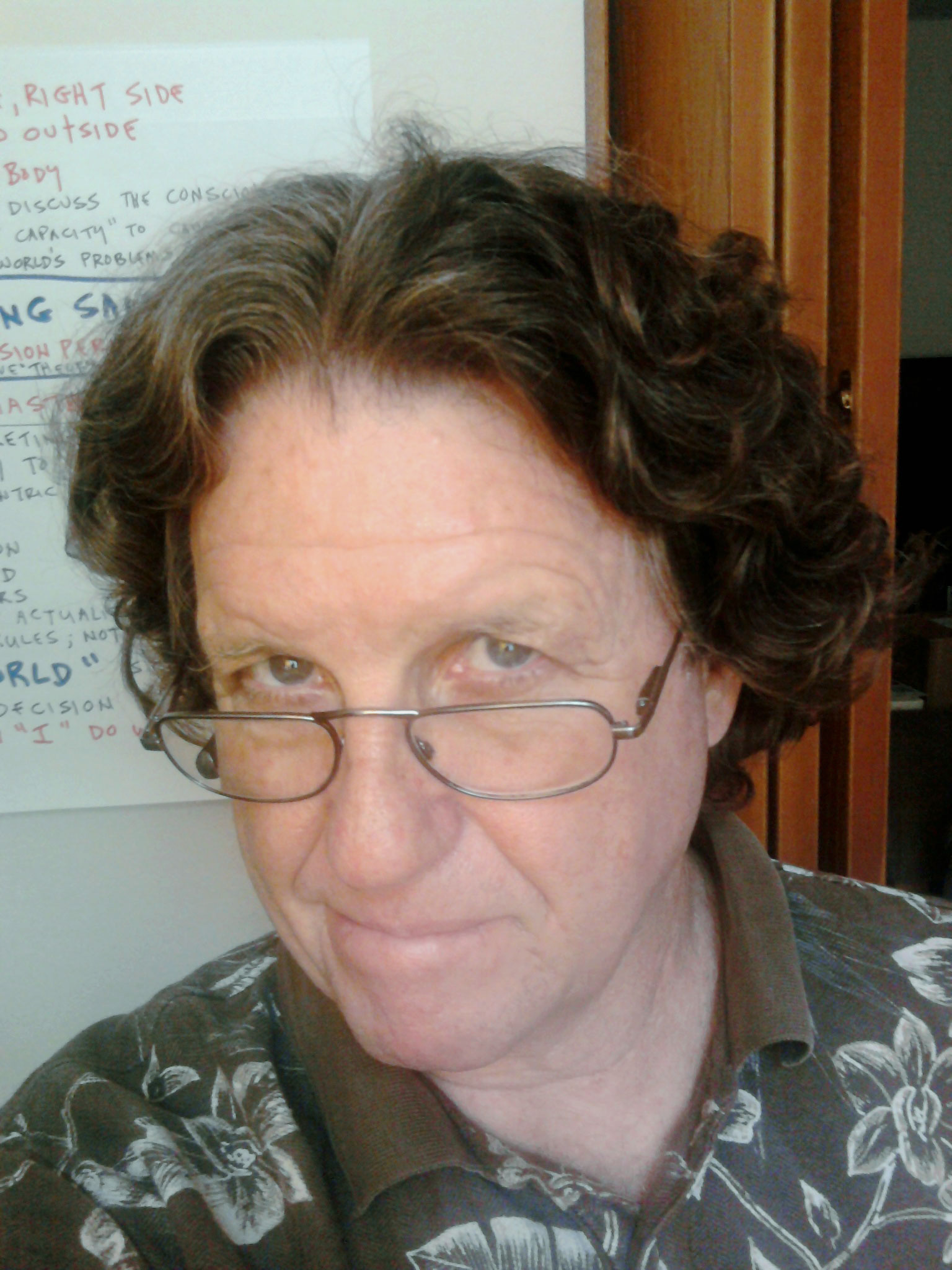
Bruce Vann is a retired USBC silver-level coach and certified corporate performance coach who uses bowling as a lens for lifelong human development. His work draws on decades of experience in athletics, competitive bowling, mentoring, and coaching, including league, tournament, and the West Coast senior tour. Honor scores: 300 game and 834 series. He publishes his methods and ideologies in human development on OptimaBowling.com. The work began with a question he asked in 1968 that still guides him today: What the hell is wrong with this crazy world of ours?
See More: About-Me