As Your Resource For Self-Development
- The Optima Bowling Coach (2025)
A New View of Behavior
(Page Created 6/6/20 Updated 2/5/26)
Inside the Optima Bowling World, A New View of Behavior reframes what human action actually is. Rather than treating behavior as something to be shaped, corrected, or controlled directly, this page presents behavior as an effect, the visible outcome of deeper perceptual control processes operating moment by moment.
This shift changes how performance, learning, discipline, and responsibility are understood across every domain of life.
In A New View of Behavior, Shelley A.W. Roy offers a way to clear out the clutter of your understanding of behavior and untangle the mystery of why we behave the way we do. With an everyday, everywhere, down-to-earth, and simplified perspective on perceptual control theory
Why the Old View Persists
Most people go through life with an inherent, simple explanation of behavior: People behave the way they do because of habits, incentives, personality, discipline, or external pressure.
Within this frame, improvement means changing behavior itself, trying harder, enforcing rules, applying motivation, or correcting mistakes.
This view persists because it appears from a blind, intuitive sense of control. Unfortunately, it consistently breaks down under pressure, complexity, and emotional intensity.
Behavior Is Not the Target
From the Optima Bowling World perspective, behavior is not the object of control. Behavior is the means by which individuals attempt to keep their experience aligned with what matters to them. It is a tool, not a cause.
When behavior changes rapidly, erratically, or compulsively, it is not because behavior has failed; it is because control is threatened elsewhere. Trying to correct behavior directly often worsens the problem by increasing internal conflict.
Perception Comes First
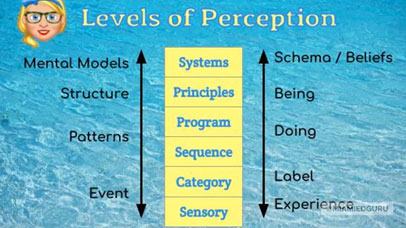
Perceptual Control Theory clarifies the mechanism. Human beings act to control how situations feel, what they perceive as acceptable, and how they experience safety, competence, or meaning.
Behavior adjusts automatically as perception deviates from internal reference values. This means stable behavior reflects stable perception, chaotic behavior reflects unresolved error, and persistent patterns reveal what is being controlled. Once this is understood, behavior becomes diagnostic information, not something to fix.
Error Explains Intensity
When one's internal calculations reveal increasing errors, people escalate behavior when things are going wrong. When perception diverges from the reference and cannot be easily corrected, effort intensifies, emotion amplifies, and action becomes urgent or rigid, explaining emotional outbursts, overthinking, freezing under pressure, and impulsive decisions.
These are not character flaws. They are signals of a control system under strain.
Discipline Reconsidered
Traditional discipline focuses on suppressing unwanted behavior. From the Optima Bowling World perspective, discipline that ignores perception results in compliance at the expense of coherence. It may succeed temporarily, but it leaves the underlying conflict intact.
A new view of discipline focuses on clarifying reference values, reducing conflicting demands, and restoring conditions under which control can stabilize naturally. Proper discipline supports self-regulation, not obedience.
Motivation Is Secondary
Motivation does not create control. It amplifies effort. When perception is aligned, little motivation is required. When perception is misaligned, motivation increases without resolving the underlying cause, which explains why highly motivated individuals still sabotage themselves, why incentives lose effectiveness over time, and why burnout occurs even among committed individuals. Behavior changes sustainably only when perception reorganizes.
Responsibility Without Blame
A new view of behavior allows responsibility without moral collapse. If behavior is a control process, responsibility entails examining what one is trying to control, rather than condemning oneself for surface actions. Blame narrows attention and freezes learning. Responsibility expands inquiry. This distinction is foundational within the Optima Bowling World.
Coaching, Teaching, and Leadership Implications
Once behavior is understood correctly, coaching shifts from correction to inquiry, teaching focuses on perception rather than compliance, and leadership becomes the stewardship of conditions rather than enforcement.
Instead of asking How do I get people to behave differently? The question becomes What are they trying to control—and why is it failing? That question changes everything.
From Behavior to Development
When behavior is treated as information, development becomes possible; therefore, performance, learning, and character development must be understood developmentally rather than behaviorally.
- Patterns can be studied.
- Conflicts can be resolved.
- Control can reorganize.
Reflection Prompt
Notice a behavior you’ve been trying to change. Instead of asking how to stop it, ask what experience you are trying to stabilize through it. A new view will open when that question is asked.
See More: A Connected School
See More: The LPPC Model
Back To: Researching Perceptual Control Theory
Author Bio

Bruce Vann is a retired USBC silver-level coach and certified corporate performance coach who uses bowling as a lens for lifelong human development. His work draws on decades of experience in athletics, competitive bowling, mentoring, and coaching, including league, tournament, and the West Coast senior tour. Honor scores: 300 game and 834 series. He publishes his methods and ideologies in human development on OptimaBowling.com. The work began with a question he asked in 1968 that still guides him today: What the hell is wrong with this crazy world of ours?
See More: About-Me